By Monika
Driving in Iceland – Essential Tips for a Great Road Trip.
Driving in a foreign country can be stressful, but driving in Iceland was one of the most pleasant driving experiences I’ve had so far.
As long as you follow the rules, driving on Icelandic roads will be easy and enjoyable.
How can it not be with the new breathtaking view around every bend of the road?
If you need more information about driving in Iceland to prepare for a great road trip, this guide is for you!
This post contains affiliate links to trusted products and services that I use and love myself. If you make a purchase through these links, I may receive compensation at NO EXTRA COST TO YOU. I appreciate your support! Also, as an Amazon Associate I earn from qualifying purchases. See the Disclaimer Policy and the Privacy Policy for more details.
- Driving in Iceland – Essential Tips for a Great Road Trip.
- Do I need a car in Iceland?
- Basic information
- How are the roads in Iceland?
- Driving rules in Iceland
- Always have your driver's license with you
- Do not speed
- Fasten your seat belts
- What about car seats?
- Do not stop on the road.
- Do not use your phone while driving
- Keep your headlights on at all times
- Watch out for animals
- No turn on red
- Respect the weather
- Respect road closures
- Off-road driving
- No alcohol
- Rotaries (roundabouts)
- Tunnels
- Iceland specific road signs:
- Driving in Iceland in the winter
- Gas stations in Iceland
- Navigation and getting directions in Iceland
- Parking fees in Iceland
- Tolls
- Handy accessories to have in your car in Iceland
- Safety websites to check before you travel
- Best thing about driving in Iceland?
Do I need a car in Iceland?
You do if you’d like the flexibility of visiting all the beautiful places in Iceland at your own pace.
Driving in Iceland is an experience in itself, with incredible scenery everywhere around you, so the freedom to stop and explore on the way is priceless.

Book your car rental with 5% discount automatically applied to your reservation with my personal favorite local company – Blue Car Rental – or another great local company – Lava Car Rental – also with 5% off your booking!

If you’re not up for self-driving, you can book guided tours. There are many wonderful options that allow you to see just about any site in Iceland.
READ MORE: HOW TO SEE ICELAND WITHOUT A CAR
Using public transport is of very limited use outside of Reykjavik.
Fun fact: there are no trains in Iceland!
Basic information
- You drive on the right side of the road.
- The speed is posted in km/hr (kilometers per hour)
How are the roads in Iceland?
There are 3 kinds of roads in Iceland:
Paved roads
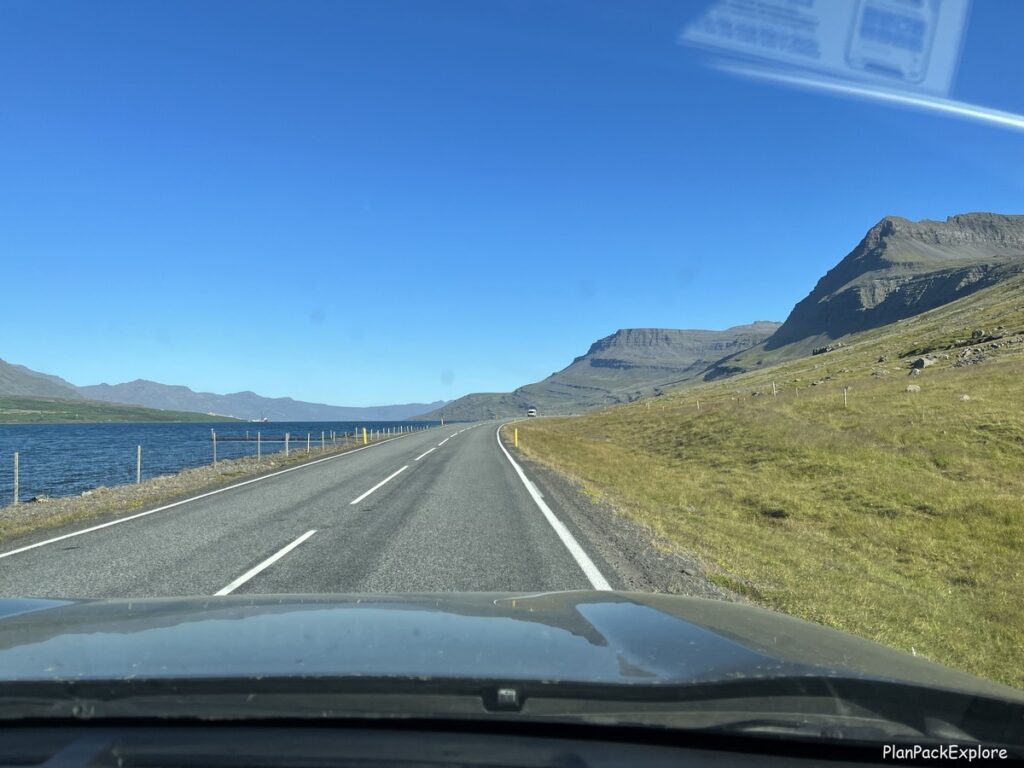
These are roads like the Ring Road (also known as rt. 1), encompassing the perimeter of Iceland, as well as other smaller paved roads. These are the roads that lead to destinations popular with first time visitors, like the Golden Circle or the South Coast.
The paved main roads and some of the gravel access tracks (see below) are usually very well maintained and easy to drive on, even in the winter months, if you’re familiar with winter driving in your home country.
Gravel & dirt roads
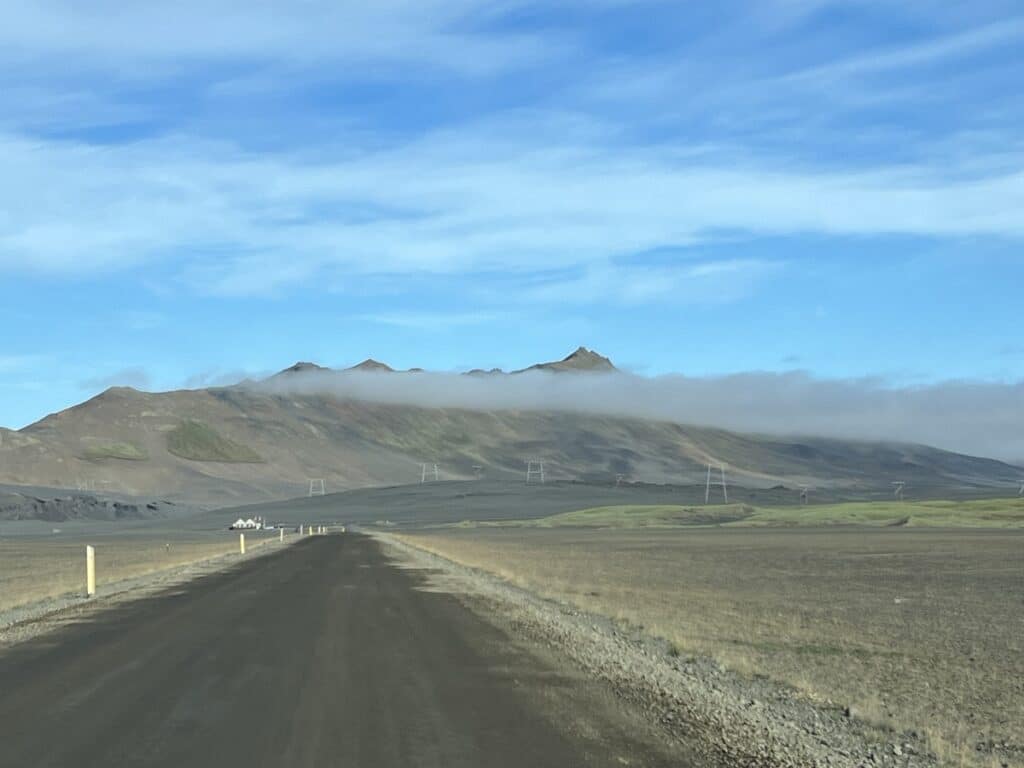
Some access roads to certain attractions are not paved, but they are relatively well maintained (meaning no major potholes) and easy to drive on for any car.
F-roads
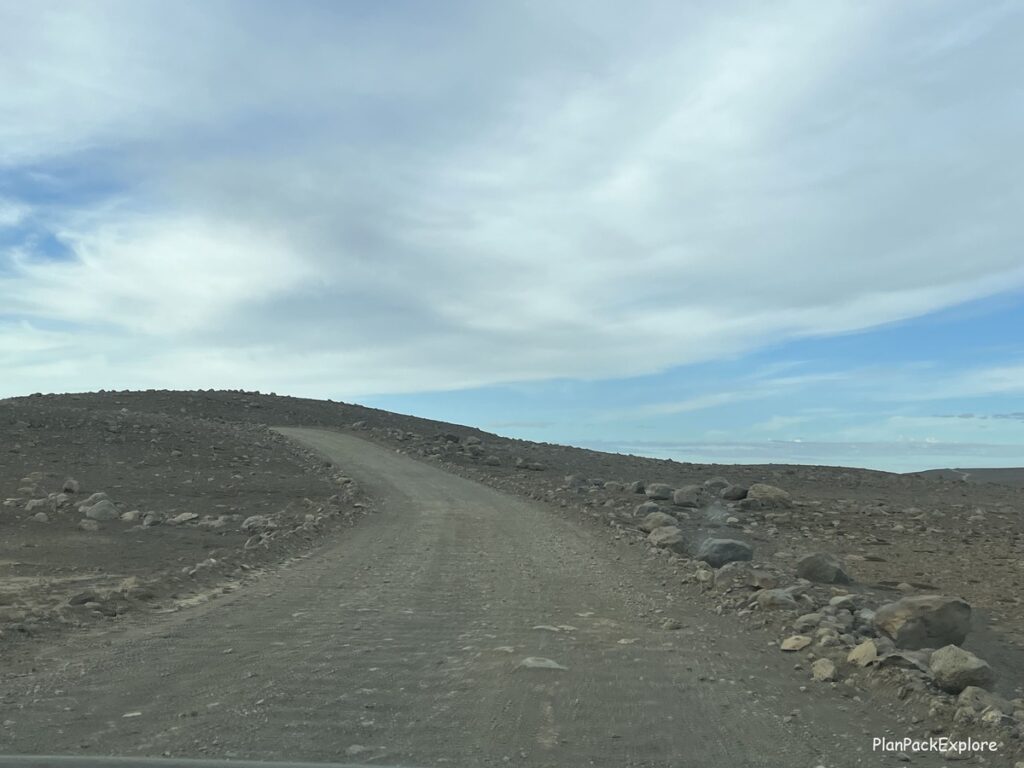
F-roads are unpaved, rather rough mountain roads. They are not always steep, in fact they usually aren’t but the are full of potholes and may have river crossings on the way to some destinations.
F-roads are primarily seen in the Highlands (the interior, uninhabited region of Iceland), but also in other areas, like Snaefellsnes Peninsula or the Westfjords.
You need an F-road approved 4×4 vehicle to drive in the Highlands.
These roads are only accessible in the summer months, usually between mid-June to mid-September. Their opening and closing times vary depending on the weather conditions each year and you can get that information here.
River crossing (also called fording a river)
When driving on F-roads you sometimes have to cross a river. Some rivers are small, and some are larger (see photos below) so make sure you do your research and have a proper vehicle that is approved for driving through the water.
Always check with your rental company!

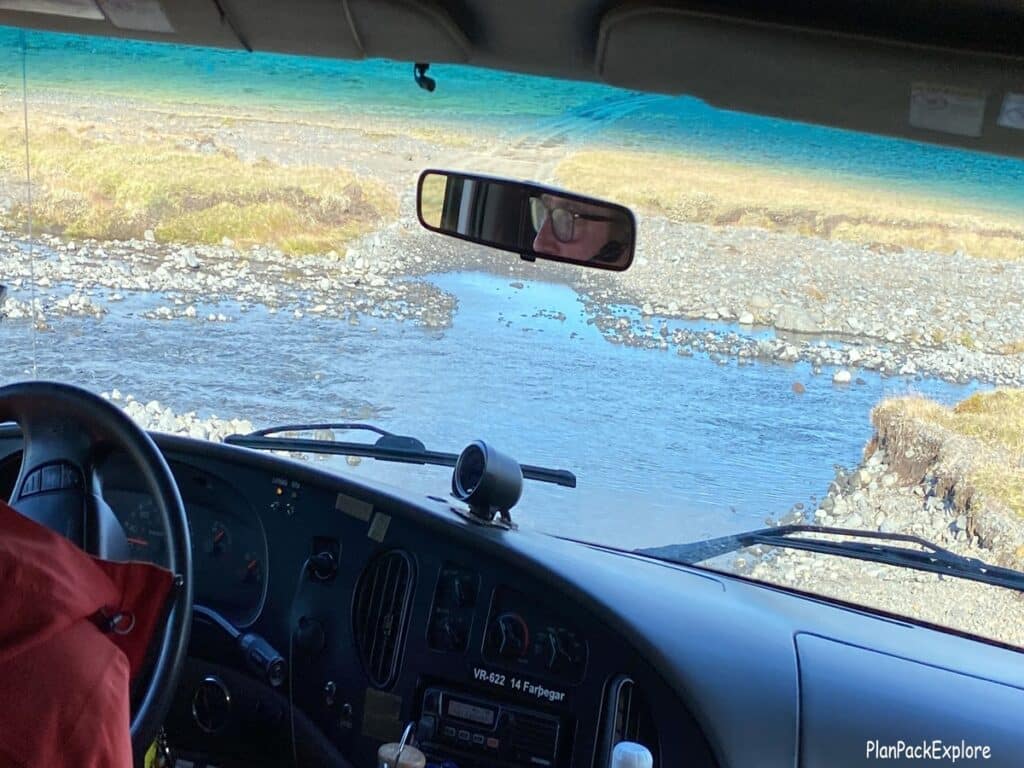

The easiest F-roads, great for Highland beginners, WITHOUT any river crossings, are road F35 leading to Kerlingarfjöll and road F208 from the north leading to Landmannalaugar.
READ MORE: Renting a Car in Iceland – How to Choose the Right Car for Your Trip.
Driving rules in Iceland
Here is the list – the law, the safety and the common sense!
Always have your driver’s license with you
US, Canadian and EU licenses are accepted without the need for an international driving permit.
If your license is from outside of these areas, as long as it clearly states your name, license # and has a photograph, it will also be accepted.
If your license in in a different alphabet (other than latin alphabet) or does not meet the above criteria, you will need an international driving permit.
Do not speed
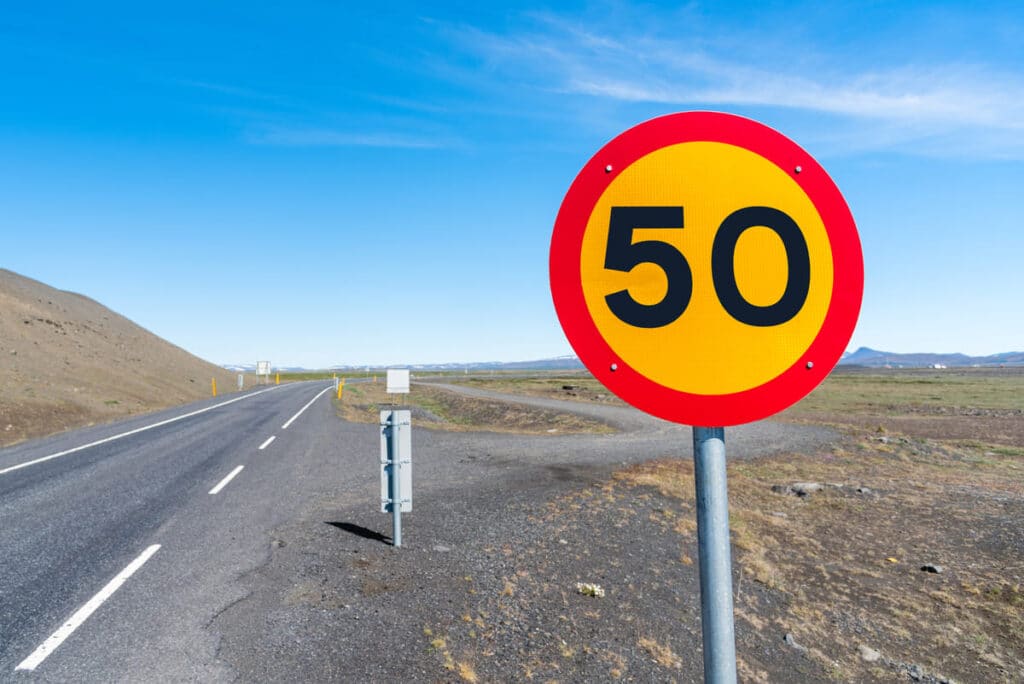
There is no need to rush – give yourself enough time to get to your destination safely, while staying safe. Always add a little time to your Google Maps estimate to allow for the unexpected weather change and of course some safe stops to take in the views.
And there are speed cameras around the Ring Road. The tickets are quite expensive so don’t go over the speed limit.
Helpful hint: always adjust your speed to the current weather and road conditions and your driving skills.
Unless specified otherwise, here are the speed limits in Iceland:
90 km/h (56 mph) on paved roads outside of urban areas
80 km/h (50 mph) on gravel roads in rural areas
50 km/h (30 mph) in urban areas
Fasten your seat belts
That goes for both the driver and all the passengers in the car.
What about car seats?
If your child needs a car/booster seat, I recommend checking in with your rental company. Depending on which country you are coming from, you may or may not be able to use your own car seat.
If yours doesn’t meet the requirements in Iceland, you can rent one with your car.
Do not stop on the road.
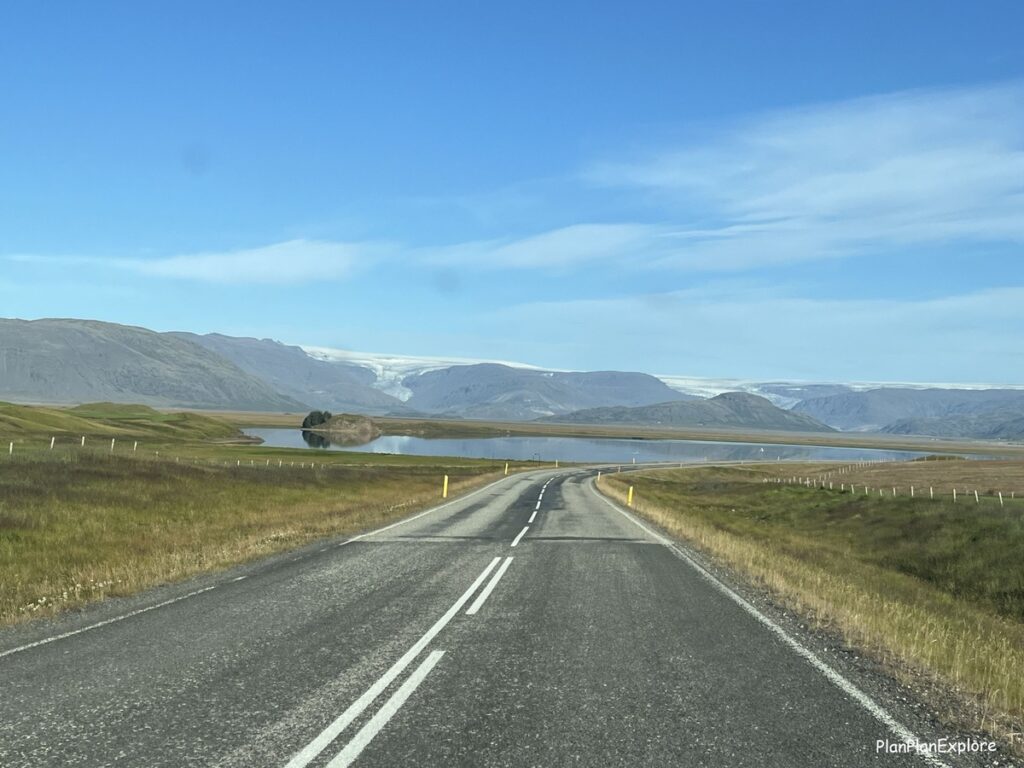
There is usually no breakdown lane or a shoulder, but there are spots to pull off and admire the scenery fairly often.
Do not use your phone while driving
That’s not legal in Iceland, and if pulled over you may get a fine.
Keep your headlights on at all times
That is a year-round rule. You need your headlights turned on any time you drive.
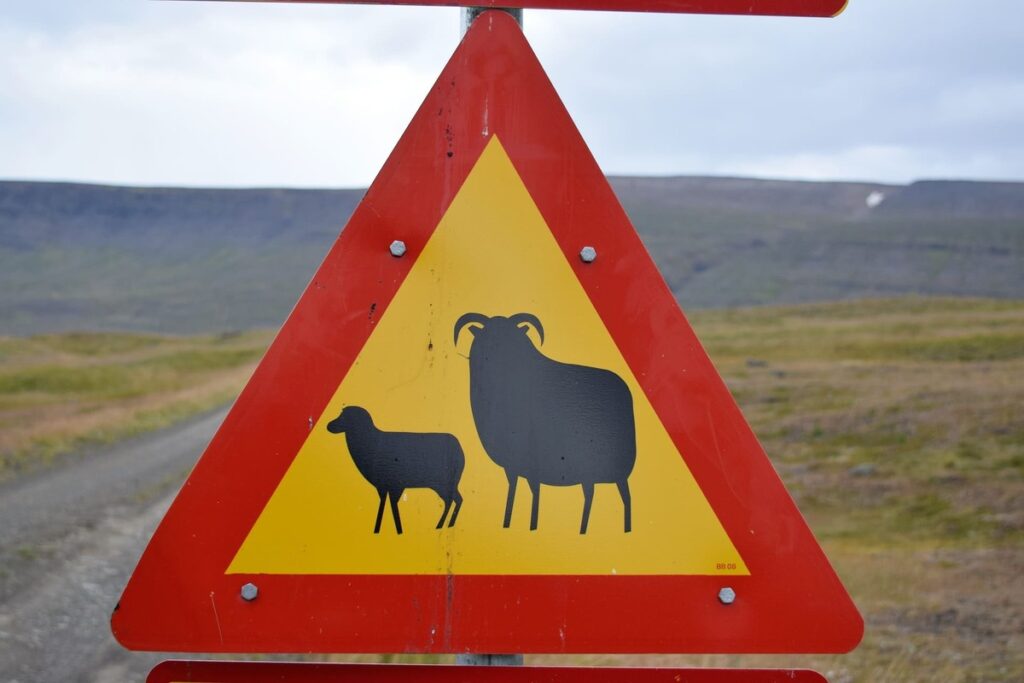
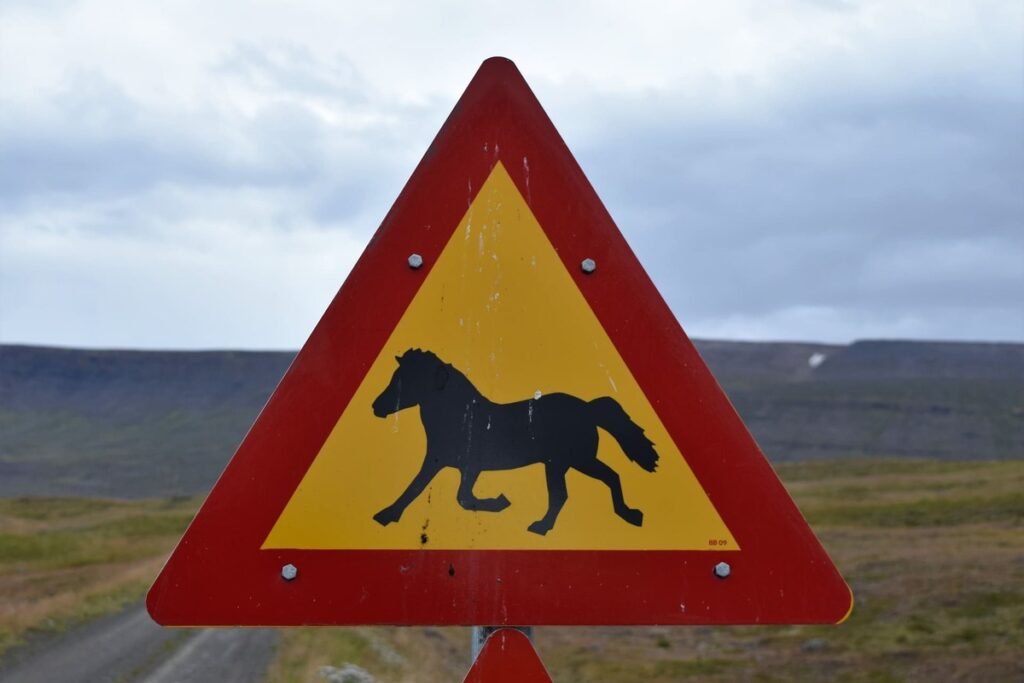
Watch out for animals
They always have the right of way!

The most common animals are sheep and while most of them move over as you’re inching forward, some will be quite stubborn (watch the short video below).
It’s better to avoid honking your horn, only use it if absolutely necessary.
You’ll see signs in places where they are more likely to appear, but it is safer to assume that they can turn up everywhere!
No turn on red
If you’re coming from the US, you’re probably used to taking a right turn on the red light after stopping. Don’t do that in Iceland, it’s not allowed.
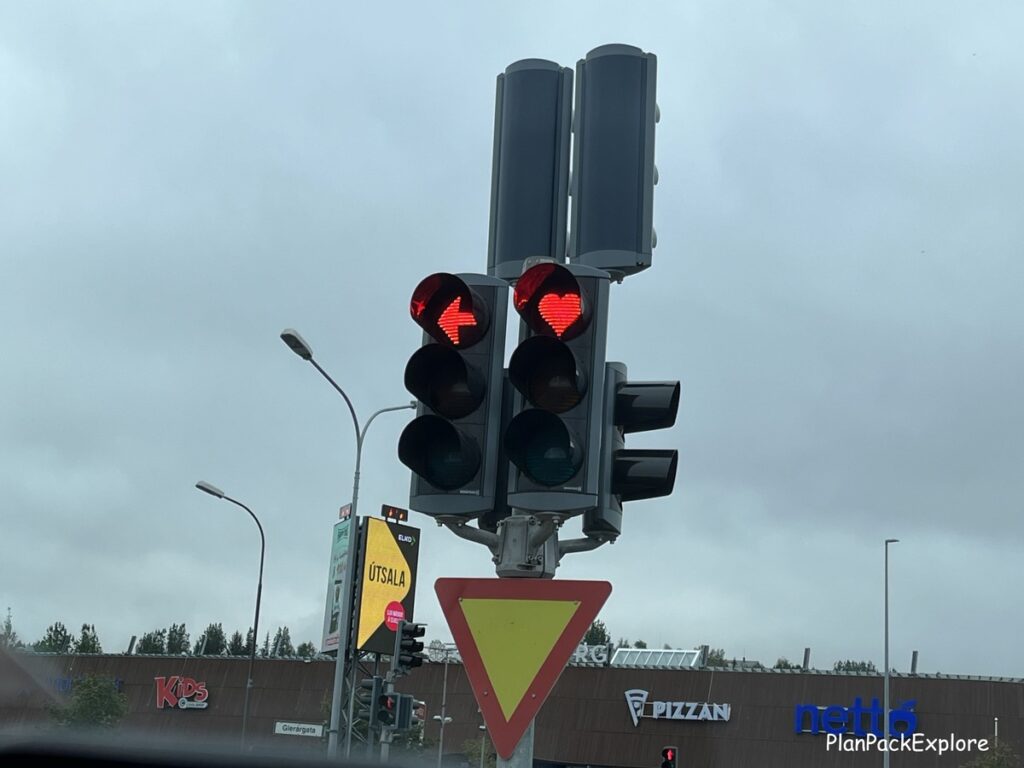
Look at the cute heart shaped red lights – signature traffic lights of Akureyri (a town in North Iceland)
Respect the weather
As I mentioned earlier, always adjust your speed to the current conditions. Just because the general speed limit allows a certain speed , it’s not always safe to drive it.
Roads can be slippery in the rain or icy in the colder months. Mud on unpaved roads will slow you down as well, and most of all be mindful of the WIND!
Iceland is known for strong winds so when the rental company tells you to hold on to the car doors when you open them, please make sure you do that, or an unexpected gust can damage your car.
We had an extremely (to us a least) windy day during our first visit to Iceland when we drove to the Snaefellsnes Peninsula – I’ve never experienced wind like that before or after and there weren’t even any warnings issued for that day! But if I didn’t hold on to the car door firmly, we definitely would have lost it! We just lost my travel notes for the day from the door pocket…
Respect road closures
Icelanders are not easily deterred by the weather. So when you do get a weather warning or a road closure notification, please adjust your plans accordingly. Driving in unsafe conditions will put both you and rescue teams you may need in danger.
Off-road driving
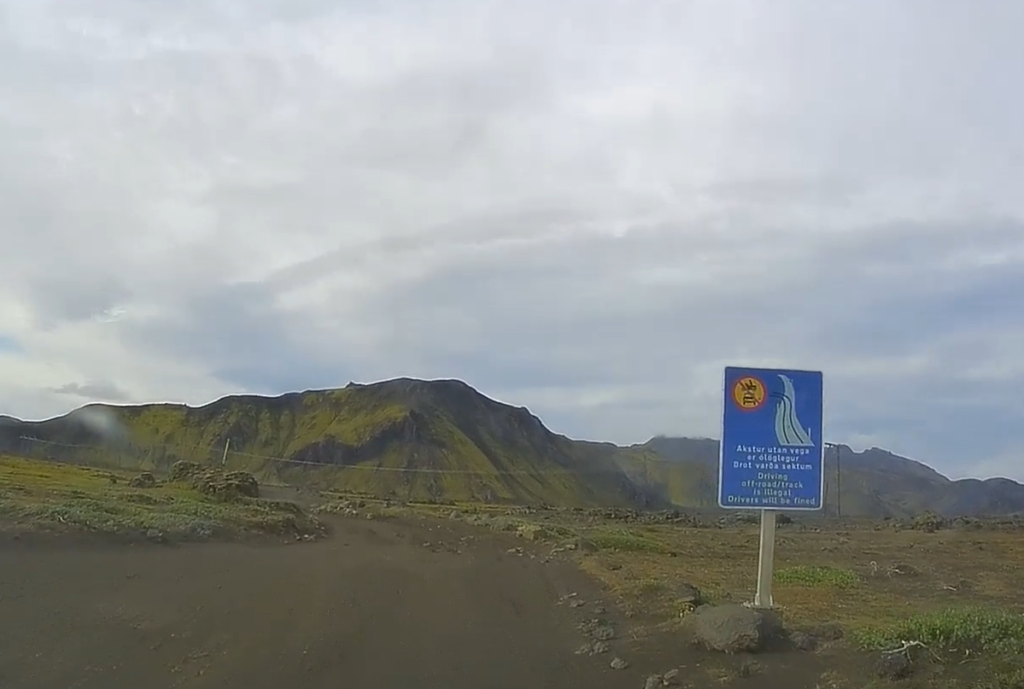

Don’t do it! As tempting as it may be to drive into the otherworldly Icelandic landscape – it’s illegal. And very bad for fragile vegetation and nature.
No alcohol
There is zero tolerance for driving under the influence in Iceland and allowable limits are very strict. One beer will put you over. So don’t drink and drive!
Rotaries (roundabouts)
You’ll see them mostly in larger towns and cities, like Akureyri and Reykjavik. Use your blinker only when you exit the rotary and only use the outside lane to exit at the first exit.
Important – cars on the inside lanes have the right of way and if you’re in the outside lane, you must yield.
Tunnels

You’ll encounter a few of them if you’re driving around the Ring Road.
As of now, the only paid tunnel in Iceland is the Vaðlaheiði Tunnel in Akureyri. The cost per car is 2216 ISK one way and you can easily pay the fee online.
Lava Car Rental offers to take care of this payment for you if you include that option in your booking – just book your rental car with a 5% automatic discount and add the tunnel payment benefit from the “Add-ons and Accessories” section.
The tunnels are usually well lit and easy to go through; however there are some one-way tunnels (i.e. in the Westfjords or Troll Peninsula) that are a bit trickier. The general rule is: if the pullout is on your side, you have to yield and let the oncoming traffic go. Pull up all the way in these areas so that more cars can fit behind you if needed.

Rent a proper car for your adventure with a 5% discount automatically applied to your reservation from a trusted local company I always rent from – Blue Car Rental!
Iceland specific road signs:
There are some road signs that are specific to Iceland. Here are examples:
Point of interest

This sign indicates that a tourist attraction is nearby.
Single-lane bridge (Einbreið Brú)
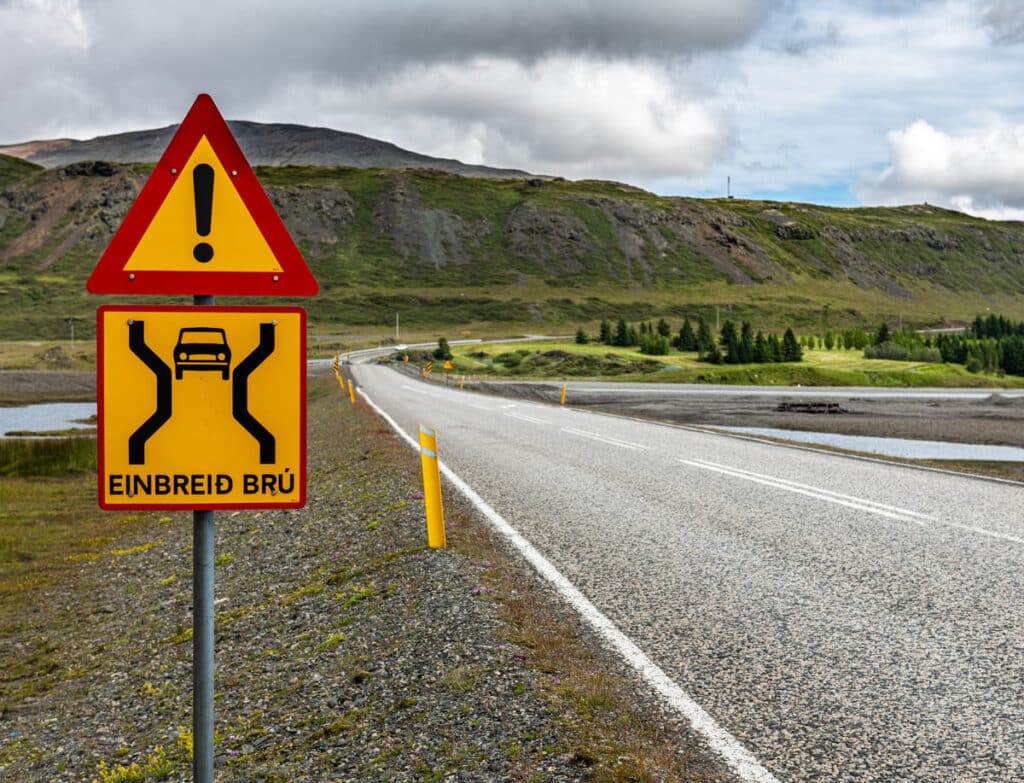
There are quite a few of them around the Ring Road and in the Highlands.
How do you cross one safely?
The car that comes to it first has the right of way. You have to yield to the oncoming traffic of cars already on the bridge.
If there is a line of cars on both ends, you take turns.
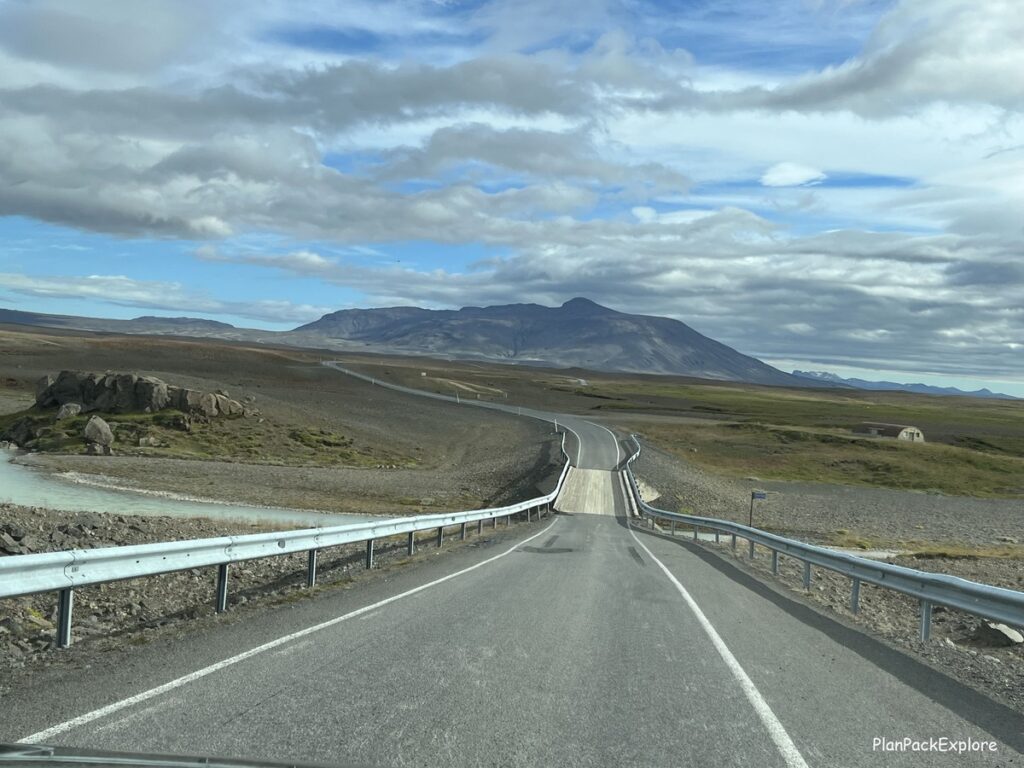
Most of the bridges are short enough that you can see the other side clearly.
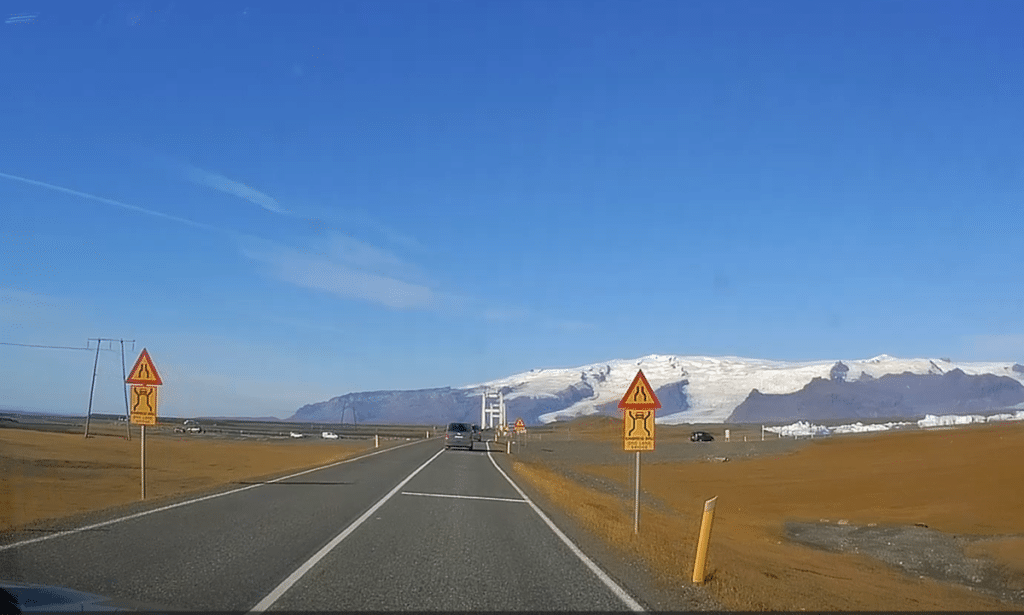
The only longer one that we had to back out of (a little) was the bridge next to Jökulsárlón Glacier Lagoon, but we came at a very busy time.
Blind crest (Blindhæð)
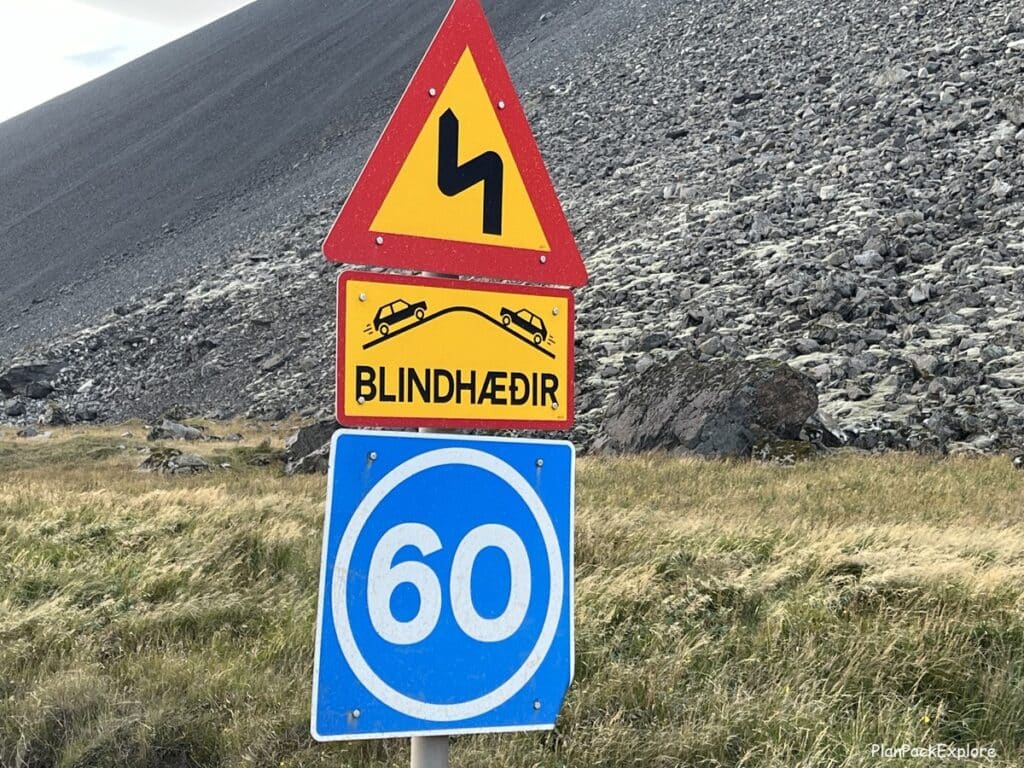
Blind crest is a hill where you can’t really see if a car is coming from the opposite direction. Just drive slowly, stay alert and keep to the right side of the road. These hills are mostly located in the Highlands.
River crossings (Óbrúadar Ár)
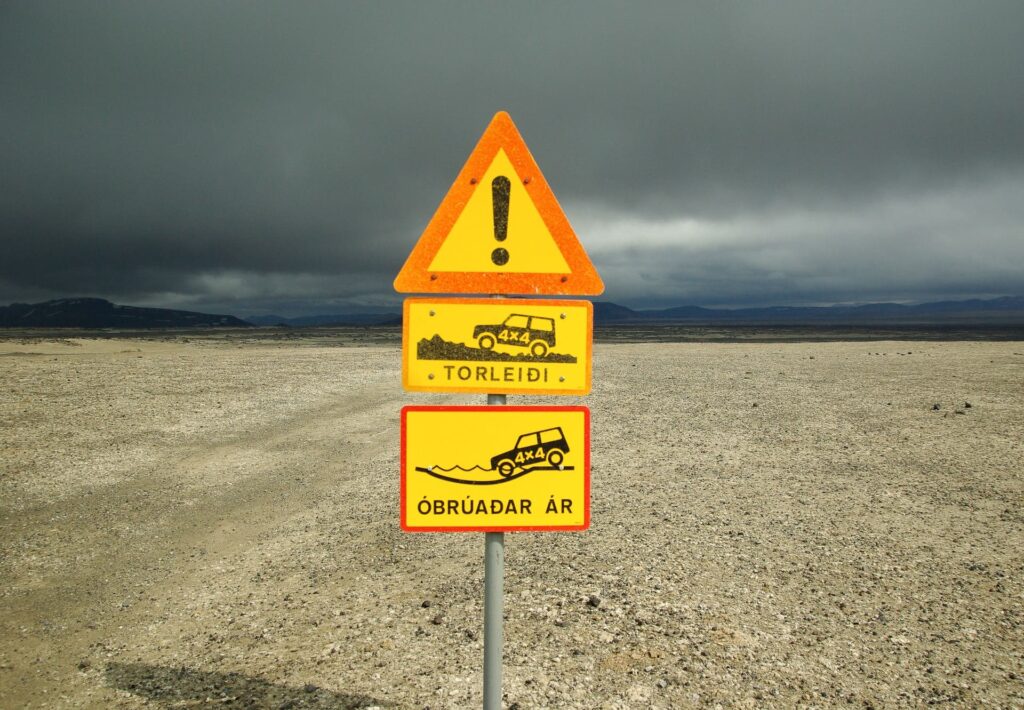
This sign warns you that there is an unbridged river ahead. Only attempt crossing rivers if you have an appropriate car and some river fording experience.
Driving in Iceland in the winter
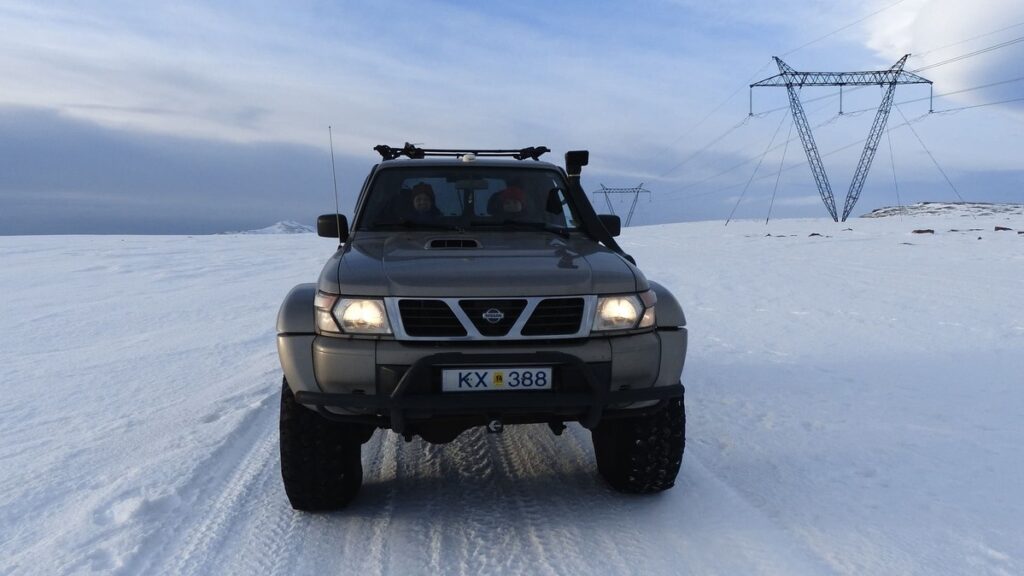
Winter driving in Iceland definitely comes with its own challenges but it can also be a really memorable experience. While very different, the winter landscapes are just as mesmerizing as the summer scenery.
BUT: if you’re from a tropical country or not very experienced in driving in the snow, you may want to choose the summer to visit or book tours to experience the magic of Iceland safely.
In the winter the roads can get icy and may be covered in a layer of snow, so some driving experience in these conditions in your home country will come in handy.
Most rental cars come equipped with studded winter tires but renting a 4X4 SUV is a wise choice to increase safety.
Also, roads outside of major cities are not lit up, so you should schedule your day trips within the daylight hours so that you can see the road clearly. If you find yourself driving in the dark, lower your speed and use extra caution.
Gas stations in Iceland

You have two kinds of gas stations in Iceland: the full-service ones with staff inside, restrooms and often a small store or a café, and the stand-alone unmanned ones.
The further away from a major city like Reykjavik and Akureyri you go, the sparser they will become.
The unspoken rule to follow when it comes to getting fuel in Iceland is to “never get your gas gauge drop below half”.
When you see a gas station – just fuel up!

Getting gas in Iceland:
At the full-service stations you have the option to fill up your tank. You just give the attendant inside the building your pump number and afterwards you pay inside. You can use any credit card (Visa and MC are best, no PIN required)
At the unmanned stations you do not always have the option to fill up. In those cases you put in the amount of money (not gas!) and use a card (credit or debit) with a PIN – make sure you have one with you for situations like that. If your tank didn’t fill up, just repeat the process.
Helpful hint: the handle for gas (petrol) is GREEN, and the handle for diesel is BLACK. For visitors from the US, it is exactly the opposite of what we’re used to, so pay extra attention!
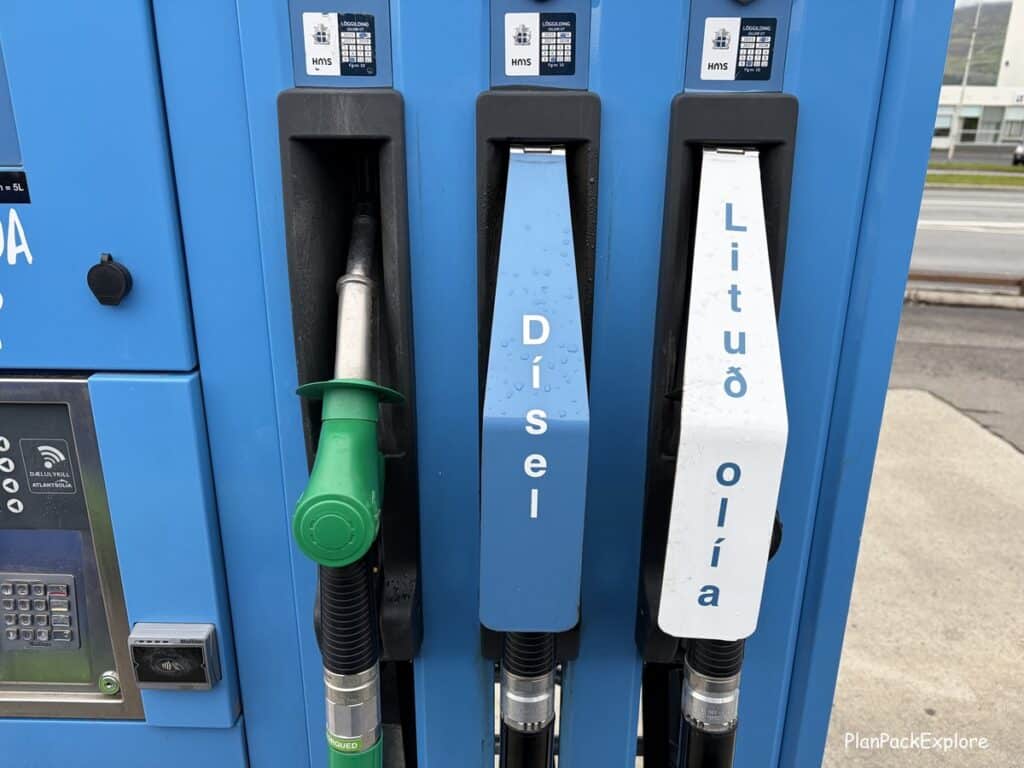
The right fuel is marked both on the gas cap of your car or campervan, as well as on the fuel handle at the pump.
If your tanks fills up before reaching the specified cost, don’t worry. You only get charged for the amount of gas you actually put in your car and if there is a hold placed on your card, it usually comes off in a few days.
If you’d rather not deal with that you can get a prepaid gas card from a gas station (N1 stations offer one in different amounts).
Most rental companies also give you a gas discount card with their rentals. Each time we rented from Blue Car Rental we got a discount card to Olis gas stations, where you save on gas and their restaurant meals, which are actually really delicious – try the hot dogs!
If you’re planning a road trip in Iceland and would like to know where the gas stations are, I have a perfect map for you! This Iceland Adventure and Travel Map has all the gas stations listed and is also a great backup for your navigation system. It’s high quality and very easy to read. I don’t travel without it! It’s currently in and out of stock on Amazon but keep checking!
Navigation and getting directions in Iceland
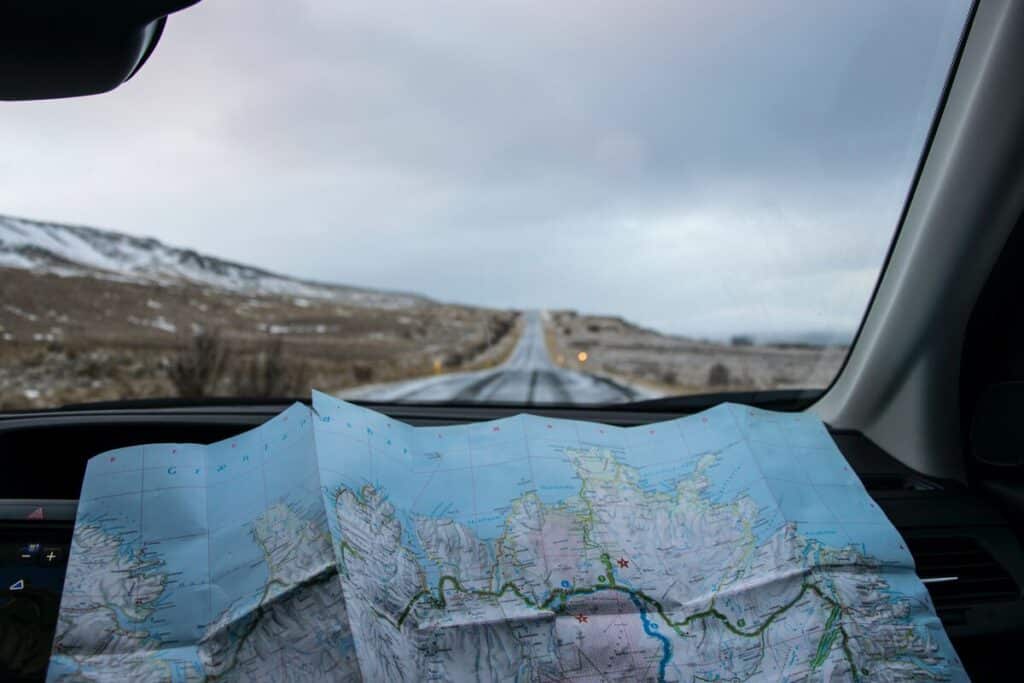
Each time we went to Iceland we used Google Maps and it worked great for us.
We do research our destinations ahead of time and make sure we have the right places typed into the search box. Sometimes you have to type a specific name to end up in the correct parking lot etc., so make sure you do that head of time.
In my destination guides I always specify if there is anything special you need to type in to get to where you need to go, so make sure check them out!
Parking fees in Iceland
Most popular tourist destinations in Iceland have parking fees. Usually, you have a few options to pay them.
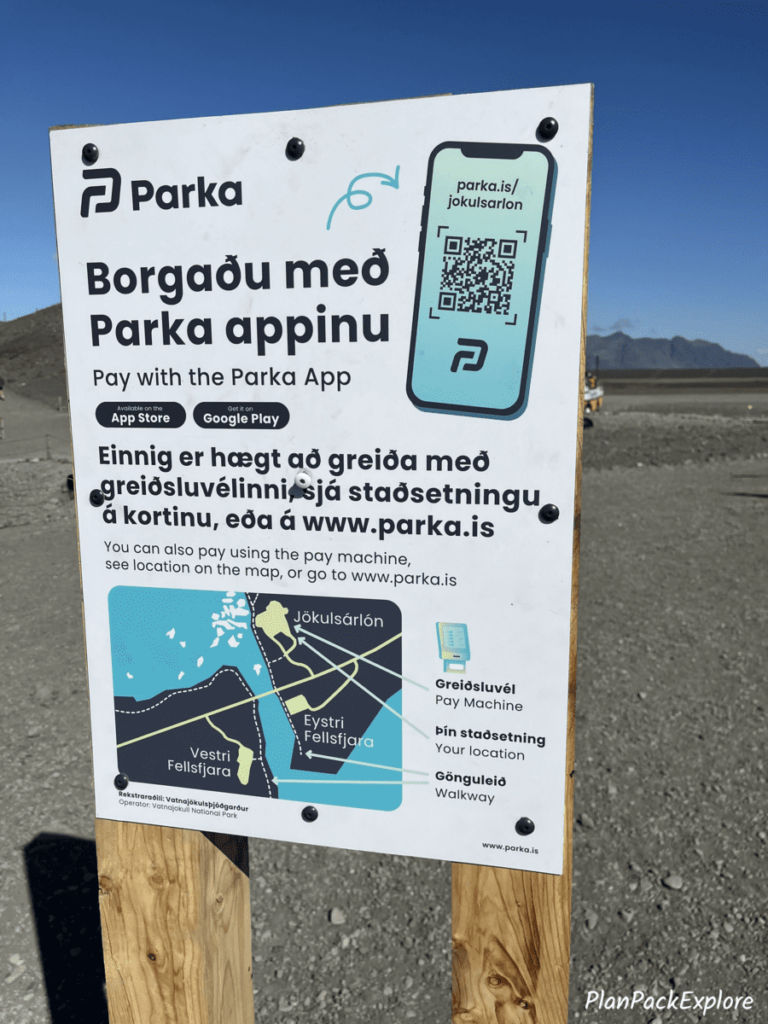
Some attractions have a sign with a QR code for a payment app. There are two main ones: the Parka.is app and the EasyPark.is app.
Other ones have pay kiosks where you put in your car’s license plate # and pay that way. Some places have both options.
In some places you need to display a payment stub on your dashboard (like the “pay and display” parking lot at Seljalandsfoss waterfall until recently – you now pay at the kiosk or with an app).
If you forget to pay while there you can typically still pay within 24 hours of your visit.
What if you just drive in and out of the parking lot?
Usually, you’ll have about 10 minutes of a “grace period” to decide if you are staying or not. Anything longer that that – you have to pay the fee.
Most fees are set amounts, but there are some destinations with the hourly rate, like one of my personal favorites in Iceland – Reykjadalur Steam Valley.
Tolls
As I mentioned earlier, there is only one toll road in Iceland – the Vaðlaheiði Tunnel in Akureyri.
The cost per car is 2216 ISK one way, and you can easily pay the fee online or, as I mentioned earlier, add that option to your Lava Car Rental booking, and they will take care of it for you!
You have 24 hours after crossing the tunnel to make the payment. After that, your rental company receives the bill and charges you for that plus a late fee.
Handy accessories to have in your car in Iceland
A Wi-Fi box/portable hotspot – you can rent one with your car and I personally find it extremely useful. It keeps you connected even in remote areas, where cell signal can be spotty. It is also very cost effective if you have to connect multiple devices.
A phone holder – so you can comply with the law and use your phone hands free. It also works great if you’re using your phone for directions. It will keep your device safe and securely in place.
Multi-port USB charger – it’s a perfect accessory if you need to charge multiple devices in the car, as most of them don’t come with more than 2 USB ports.
🛜 Stay connected during your trip with an eSIM like Airalo, Saily or Sim Local!

Safety websites to check before you travel
Weather in Iceland is unpredictable and can change quickly even in the summer.
Always check the weather forecast on vedur.is and the road conditions on road.is before you set off.
You can download apps for the above websites on your phone, so they are easier to access.
SafeTravel.is website/app is also a great resource to check the conditions not only for driving but also hiking. It also allows you to submit your location and page emergency services in case you need help.
Iceland’s emergency # is 112.
READ MORE: Best Apps for Iceland – What I Use, Love and Recommend!
Best thing about driving in Iceland?
No traffic! Seriously, even in the busiest months at the busiest tourist areas there is no traffic as we know it at home.
I hope you now feel well prepared for driving in Iceland. If you have any additional questions, feel free to reach out!
Having the right car that for your travel needs is very important.
Read my guide on how to choose the best rental car for your Iceland trip.
Then book with my favorite, trusted local car rental company – Blue Car Rental, and get a 5% discount automatically applied to your reservation – or another trusted local company – Lava Car Rental (with the same discount!).
👉 Don’t forget TRAVEL INSURANCE! I don’t travel without it. Get a quote from my personal #1 choice – Travel Guard – or check more options here!

Let me help you plan your trip!
Get organized with this printable, fillable 45-page ICELAND TRAVEL PLANNER – keep track of flights, hotels, tours, daily itineraries and even your trip budget!
BONUS! The planner has journal pages for your memories!
You may also like:
- 6-day Iceland Itinerary (How to See the Best of Iceland in a Short Time)
- 10-day Iceland Itinerary – Epic Road Trip on the Ring Road and into the Highlands
- Camping in Iceland: A Complete Guide and Tips from My Campervan Adventure.
- Golden Circle in One Day – Full Guide to the Main Stops and Best Detours.
- Landmannalaugar Travel Guide – All You Need to Know + Best Things to Do
- Best Places to Visit on the South Coast of Iceland
- Hverir Geothermal Area – a detailed guide + useful tips
- Best Black Sand Beaches in Iceland – a Practical Guide
For more Iceland inspiration and travel guides click HERE.
Need more help planning your trip? Join my Explore Iceland: Travel Tips & Advice FB Group community to ask questions, share your experiences, plus get expert travel tips and advice from a supportive community of Iceland enthusiasts! Join today!
🎙️ Prefer to listen to the travel guides instead? Check out my Explore Iceland Travel Podcast and easily plan your trip on the go!
About Monika
An avid traveler and a passionate trip planner, mildly obsessed with being organized and prepared 🙂
Well aware of how precious travel time is, I’m here to share my experience and help you get the most out of your vacation time.
“Taking the hassle out of trip planning”