
By Monika
Driving in Portugal Made Easy: My Best Tips for a Safe Road Trip.
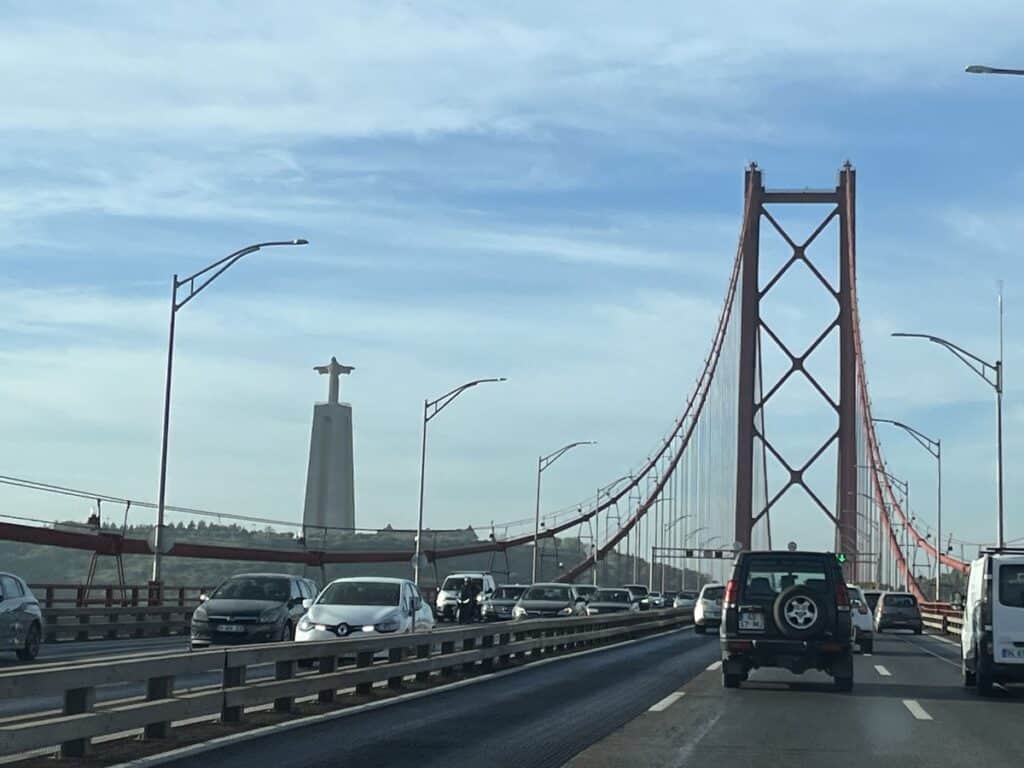
If you’re thinking about renting a car and hitting the road in Portugal, I’m here to tell you – it’s one of the best ways to see the country beyond the big cities, like traveling around the sunny Algarve or road tripping between Lisbon and Porto.
That said, driving in Portugal does come with a few quirks, especially if it’s your first time. Tolls, roundabouts, narrow streets, and local driving habits can feel a little intimidating at first – but don’t worry.
Once you know what to expect, it’s actually very doable and incredibly rewarding.
In this guide, I’m sharing my best tips for driving in Portugal, including what surprised me, and when renting a car is NOT the best way to visit.
Plus, as always, tons of practical advice to help you feel confident on those scenic Portuguese roads!
Let’s plan a smooth, stress-free road trip together!
This post contains affiliate links to trusted products and services that I use and love myself. If you make a purchase through these links, I may receive compensation at NO EXTRA COST TO YOU. I appreciate your support! Also, as an Amazon Associate I earn from qualifying purchases. See the Disclaimer Policy and the Privacy Policy for more details.
- Driving in Portugal Made Easy: My Best Tips for a Safe Road Trip.
- Let’s start with the basics
- Where to rent a car in Portugal
- Driving requirements in Portugal
- What to expect on the road in Portugal
- 1. Driving in the cities is challenging
- 2. The roads outside of the cities are very well-maintained.
- 3. The roads are clearly marked
- 4. Service stations are easy to find
- 5. Speed limits
- 6. The left lane is for passing only
- 7. Lane changing isn’t always announced
- 8. Yield to pedestrians
- 9. Driving under the influence is not tolerated
- Toll roads in Portugal
- Parking in Portugal
- Navigation and directions
- Do you need to rent a car in Portugal?
- FAQ
Let’s start with the basics
- you drive on the right side of the road
- Portugal uses the metric system, so the speed limits will be posted in kilometers per hour (km/h) and distances in kilometers (km)
Where to rent a car in Portugal
The best place to rent a car is at the airport for several reasons:
- most of us will arrive in Portugal by plane, and the rental counters are conveniently located inside the terminal (like in Lisbon), or a short shuttle ride away (like in Porto)
- the rental counters have long opening hours (much longer than their offices in the city centers)
- they offer convenient self-service pick-up/drop-off options outside their business hours.
Always check with your rental company what their opening hours and pick-up/drop-off procedures are.
➡️ Need a rental car? Check Expedia Car Rental or Discover Cars for money-saving deals!


A few things to know about the rental cars in Portugal:
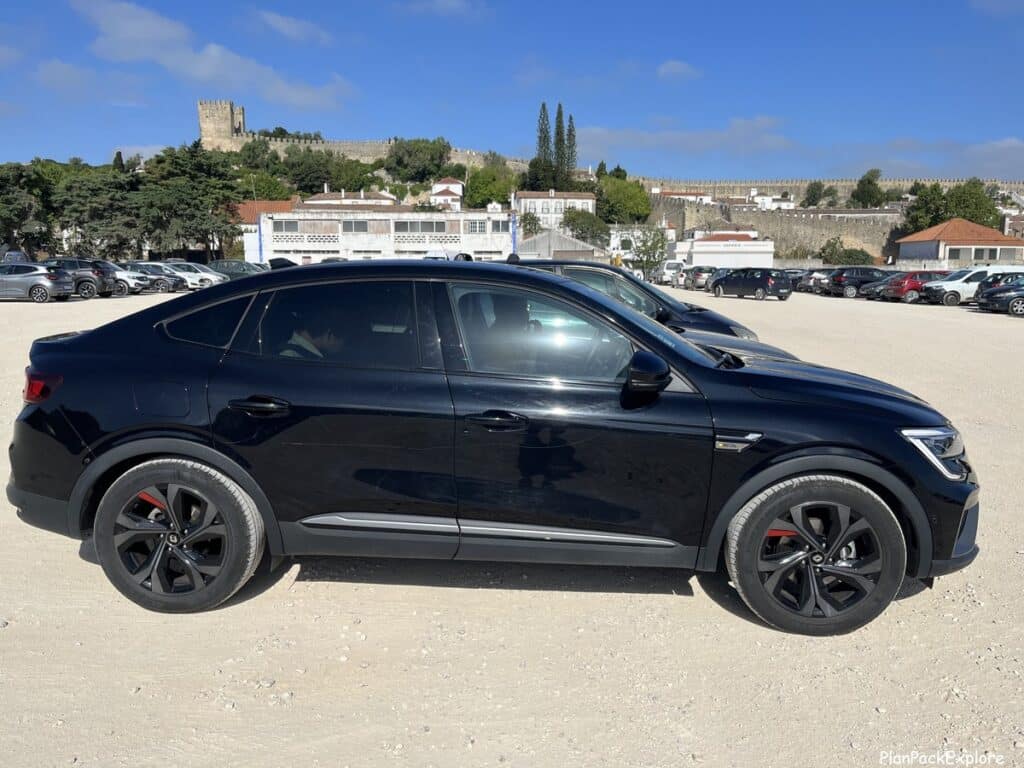
- they are smaller than what you may be used to in the US or Canada (our “midsized SUV” was the size of a large sedan!)
- trunk space is also smaller, so pack accordingly
- automatic cars are not as common as we may think, so make sure to check the car description at the time of booking, especially if you’re not familiar with driving a manual transmission car.
And make sure to:
- get familiar with the car before you drive out of the rental garage
- inspect and take photos of your car to avoid future damage disputes
Driving requirements in Portugal
To rent a car and drive in Portugal, you typically need:
- to be at least 18 years old (some companies’ age requirement is 21- always confirm before booking)
- to have a driver’s license for at least one year
- to have a valid photo ID (usually a passport for international travelers is required)
- to have a valid credit card
If your driver’s license is issued in non-Roman characters, or you are from a non-EU country, you may need an International Driving Permit – always check with your rental company to avoid unpleasant surprises.
What to expect on the road in Portugal
1. Driving in the cities is challenging
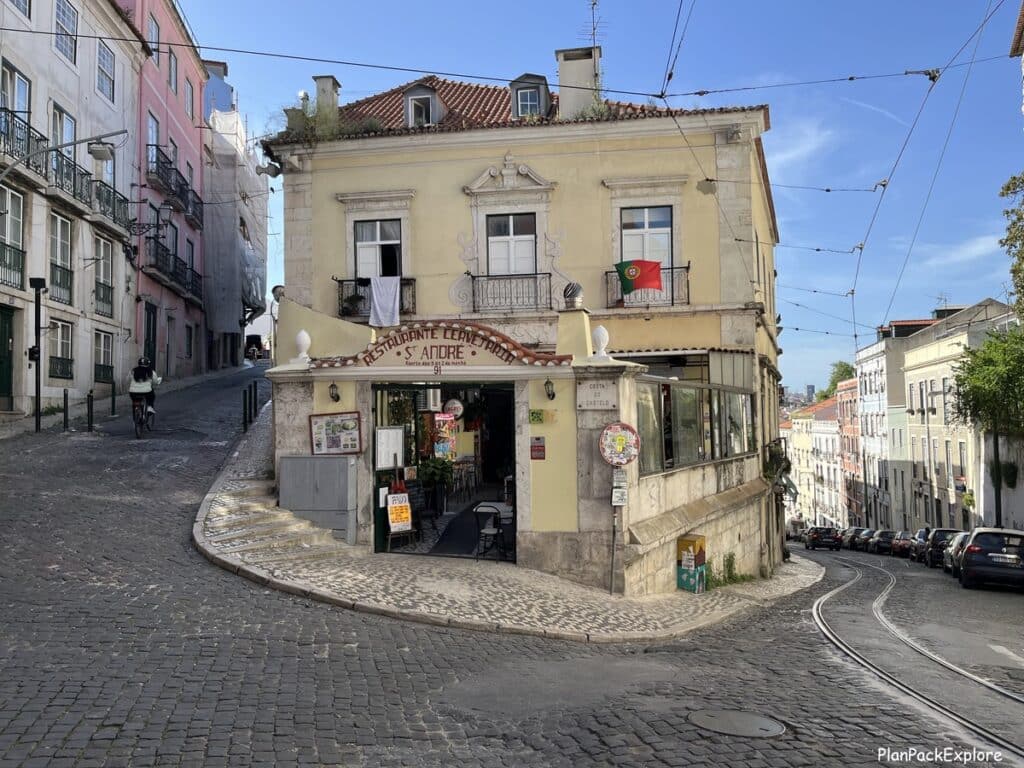
And that’s to put it mildly! The roads are very busy, can be narrow and winding, with trams crossing and multiple roundabouts (or rotaries as we call them in the US).
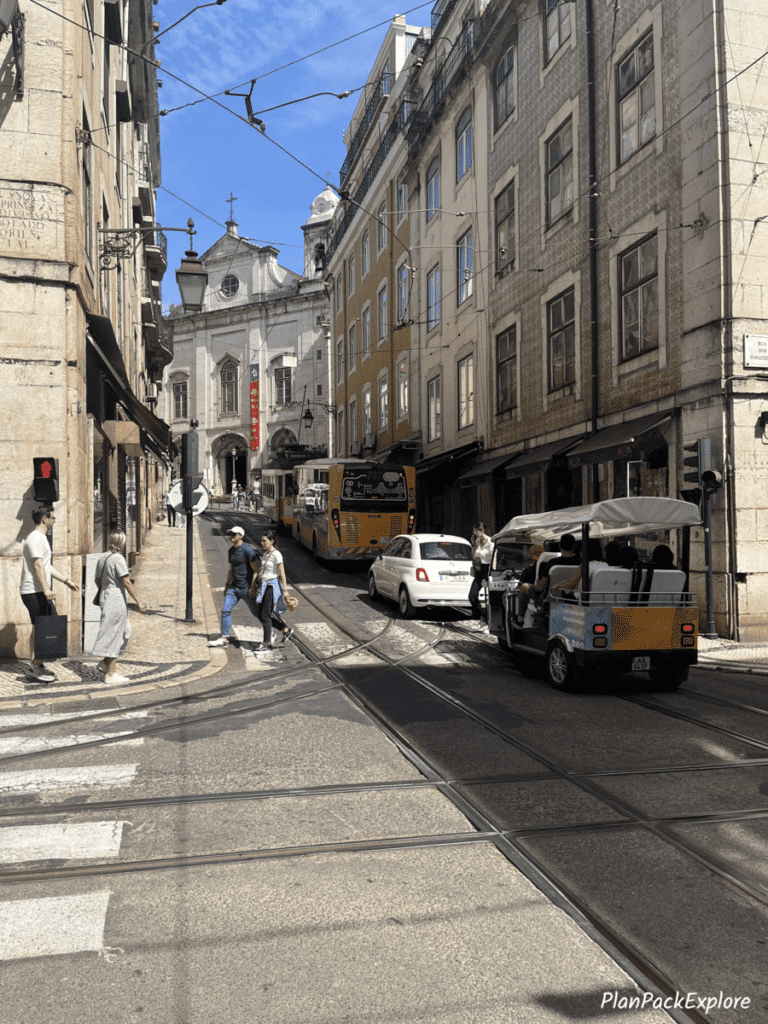
We drove out of necessity in Lisbon for just one day during our first visit and in very briefly in Porto during our second visit, when we drove from Lisbon to Porto just to drop off our luggage at the apartment and drive back to the airport (as it was well after hours for the rental company’s city office) to promptly return the car.
There are many streets closed to car traffic and lots of parking restrictions, so I will tell you right here:
You do not need (or want!) a car in cities like Lisbon or Porto. Their public transport is amazing, and you’ll save yourself from potentially stressful driving.
2. The roads outside of the cities are very well-maintained.
The highways are several lanes wide, and I have to say that I never really experienced traffic on the highways. Even the smaller, country roads are usually in great shape.
3. The roads are clearly marked
The highways are very well marked with exist signs letting you know well in advance where you should get off and which lanes to take to get there.

If you follow the signs and your GPS (more on that later in this article) you won’t get lost!
4. Service stations are easy to find
If you need to stop for gas, a snack or a restroom break, you’ll easily find a rest stop with all those amenities along the motorways in Portugal.
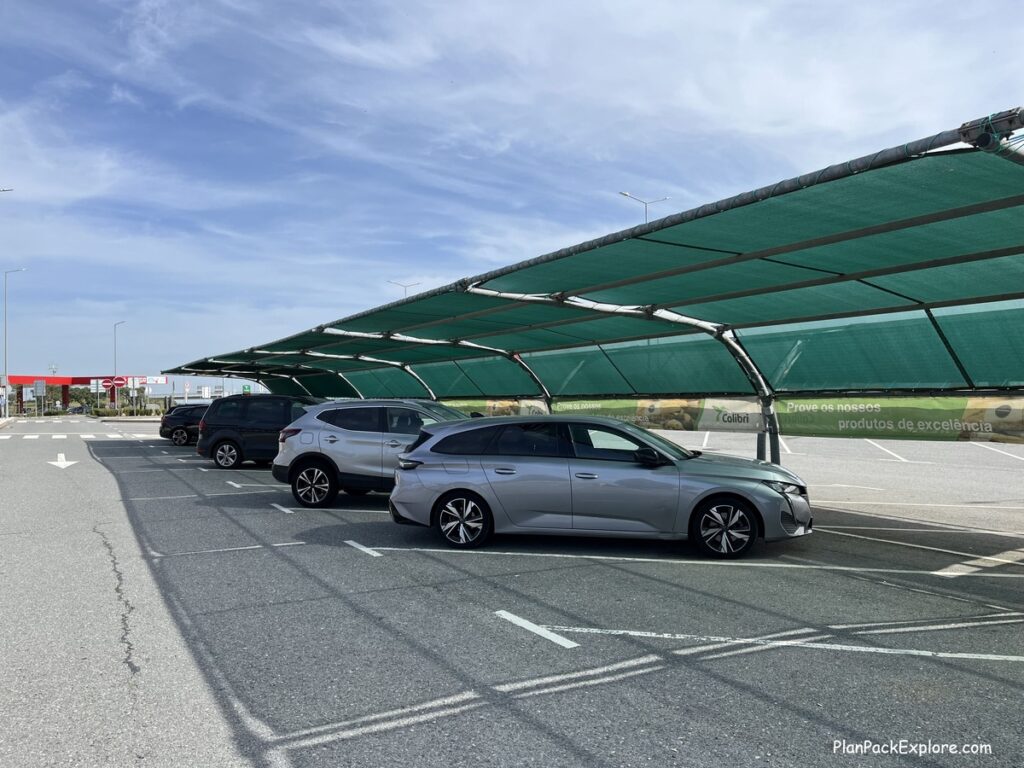
They are located right off the road so it’s easy to get off and later get back on
5. Speed limits
Speed limits are clearly posted on the sighs and you may be surprised to see that they also clearly state the MINIMUM speed for each lane of the highway!
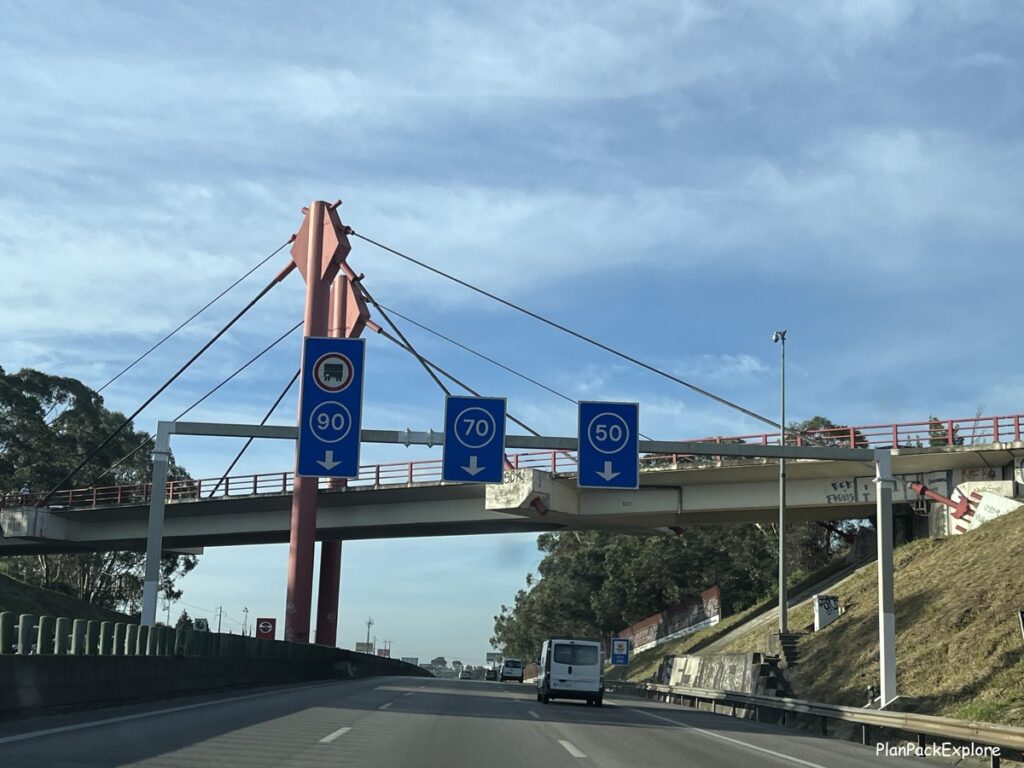

Speed limits are rather generous in Portugal:
- 120 km/h (about 75 mph) on the highways (or motorways as they are called in Portugal)
- 100 km/h (about 62 mph) on IC/PC roads (called expressways)
- 90 km/h (about 55 mph) on rural roads
- 50 km/h (30 mph) in the city
Good to know: speed limits are enforced in Portugal – expect speed cameras and some unmarked police cars, so it’s best not to speed!
6. The left lane is for passing only
You’ll see some fast, confident driving in Portugal so make sure not to linger in the left lane – pass and move back to the right lane. And maintain at least the minimum posted speed!
Otherwise, you may see a car tailgating you to hint that you should make room for passing.
7. Lane changing isn’t always announced
Blinkers (indicators) are not commonly used so be very alert on the road.
Lane changes happen fast and if you have at least a car length of space in front of you, just expect someone to move in there.
8. Yield to pedestrians
Pedestrians have the right of way, so always stop for them, even if they don’t cross on the crosswalk.
Helpful hint: on more rural roads, you may see animals on the road, like livestock – be careful and wait till the cross!
9. Driving under the influence is not tolerated
According to the ETSC (European Transport Safety Council), driving with 0.05% of blood alcohol is a serious violation with a fine of €250 – 1250.
So leave your car behind and walk if you plan on tasting some Port wines in Porto!
And if you want to visit the amazing vineyards of the Douro Valley, I highly recommend you take the tour we did! We loved the experience.
READ MORE: How to Plan a Douro Valley Day Trip from Porto (and Why a Tour is Worth It)
Toll roads in Portugal
Tolls in Portugal are considered expensive.
Just driving from Lisbon to Porto cost us about €30, and a round trip between Lisbon and the Algarve cost us even more.
However, it is still worth it, in my opinion, to take the highways vs. some toll-free back roads as it is a fast and straightforward way to get to your destination, especially if you travel on a tighter schedule.
The tolls are collected mostly electronically, and although I’ve read that there are still toll booths on some roads, I haven’t seen any during my travels.

Your rental car will most likely come with a Via Verde transponder.
With that, you can just drive into the toll lane, clearly marked with the green “V” and the tolls will be added to your rental company account.

Once you return the car, the rental company will place the total toll charges on a credit card they kept on file and you should be all set.
If you use a credit card that requires travel notifications, please let them know to expect this charge to be placed after your return date to avoid any fines for declined transactions.
Parking in Portugal
Parking in Portugal can be an adventure, although in smaller towns it is not usually an issue.
We had no issues parking in large free lots in Óbidos and Nazaré, but parking our car in Lisbon near the National Time Museum or for one night before we flew back home, near our hotel (also in Lisbon), was stressful to say the least.
There are parking garages in the city but tey do fill up quickly. We also had a very early flight home and did not want to walk to a garage at 4 am!
Once we finally found a space that was large enough to fit the car and was not marked for residents only, we tried to pay for it using the parking meter.

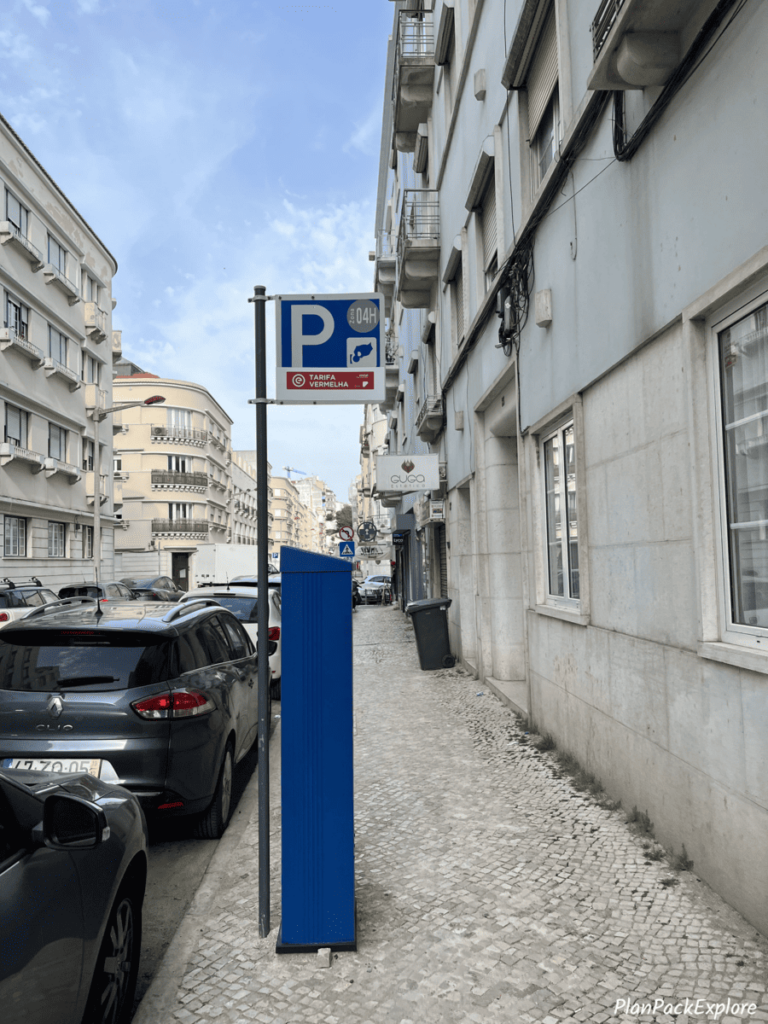
Guess what – in both cases (parking near the museum and the hotel) the meter was either broken or ate my euros without spitting out the payment receipt! And there was no option to pay with a credit card! Our only other option was paying through an app (ePark) with instructions in Portuguese only!
Luckily, a kind gentleman we spoke to near the Tile Museum helped us and paid for our spot with his app, and we just paid him back in cash.
For the parking spot near our hotel, I just left a note inside the windshield that we tried to pay, but the meter malfunctioned. A local convenience store owner saw us struggle and promised to vouch for us!
There was only an hour left of paid parking (most metered spots need to be paid till 7 pm on weekdays, with Sundays and public holidays free) so we weren’t too worried, especially since we genuinely tried!
I happily hopped on the metro to see Lisbon at night after that struggle!
Navigation and directions
As I mentioned above, the roads in Portugal are very well marked, so you shouldn’t have a problem finding your way around the country, especially if you also use some sort of navigation system.
Most rental cars come with a GPS, so you can use that to find directions.
You can also use your phone’s Google Maps or other navigation app, which may be easier. This is what we use, and it works very well.
You just need to make sure you have access to data either via your cell phone provider’s international plan or by using an eSIM like Airalo or Saily or Sim Local (⬅️ use promo code PLANPACK for Sim Local and save 5%!)

Good idea: bring a phone holder with you to attach your phone to the car’s windshield or dashboard as you drive! It’s much easier and SAFER than holding it!
If you have multiple devices to connect during your trip (travelling as a larger group, needing a laptop or a tablet), renting a portable Wi-Fi hotspot may be a better choice.
We’ve rented it twice from Portugal Internet, and both the customer service and the quality of the connection were great.
You order it online and pick it up at the airport or have it delivered to your hotel. And at the end of your trip, you simply put it in the prepaid envelope and drop it in the mailbox.
Helpful hint: there are never enough charging ports in a rental car, so I always bring this multiport car charger to accommodate all our devices.
Important: in case of an emergency or a car breakdown while in Portugal, dial 112.
Do you need to rent a car in Portugal?
It all depends on your itinerary.
Do not rent a car if:
- you plan on staying in Lisbon or Porto – just walk or use public transportation
- you plan to visit Sintra – take the train from Lisbon, and use the buses, Bolt or Uber to get around.
The only car I’d consider driving in Sintra is an e-car – read about our experience driving e-cars in Sintra to see if it’s right for you!
- you plan to visit Douro Valley from Porto – take a tour and enjoy the convenience and freedom to taste delicious Port wines!
- you plan to travel between Lisbon and Porto without stopping to see the towns, villages, and monasteries on the way – just take a direct train
Do rent a car if:
- you plan on visiting the Algarve region – it’s very hard to get around there without a car as the buses won’t get you to all the amazing spots there. Parking is generally available, sometimes you just have to get a little creative!

- you plan to visit the charming villages and monasteries between Lisbon and Porto
- you plan to visit the area of Portugal near the Spanish border
FAQ
Yes – driving in Portugal is generally safe, especially on highways and main roads. Roads are well-maintained, signage is clear, and drivers are used to tourists. The biggest challenges are narrow streets in historic towns and assertive (aggressive?) city driving, especially in Lisbon and Porto.
Not at all, as long as you know what to expect. Once you get comfortable with roundabouts, toll roads, and tighter streets, driving in Portugal is very manageable. Outside of major cities, driving is actually quite pleasant!
Usually no, as long as your driver’s licence is issued in Roman characters. However if you’re visiting from the U.S., Canada, or most non-EU countries, an International Driving Permit (IDP) may be needed and sometimes is required by rental agencies. Always check with your rental company before your trip.
If you plan to stay in Lisbon or Porto only, public transportation is great, and you can easily book guided day trips to explore nearby areas. But for exploring the Algarve, Douro Valley, small towns, or coastal routes, renting a car gives you much more freedom and saves time.
Bringing a car to the city and underestimating toll roads costs and driving times. Distances may look short, but if they involve winding rural roads and scenic detours, they can slow things down. Always build in extra time.
Need help planning your trip to Portugal? Just follow this guide to make it easy: How to Plan a Trip to Portugal in 7 Easy Steps.
Need some travel inspiration? Check out these amazing Portugal Itineraries to put those must-see destinations into a solid travel plan!
👉 Don’t forget TRAVEL INSURANCE! I don’t travel without it. Get a quote from my personal #1 choice – Travel Guard – or check more options here!

👉 To learn about my trusted travel planning resources that help me (and will help you too!) plan trips easily and save money, read this guide: How to Plan a Trip to Europe: My Favorite Travel Resources Revealed.

Let me help you plan your trip!
NEED A PLACE TO HOLD ALL YOUR TRAVEL NOTES TOGETHER?
Grab my handy PRINTABLE, FILLABLE TRAVEL PLANNER – keep track of flights, hotels, tours, daily itineraries – even your trip budget!
Access from any device and edit as needed or print for a hard copy!
BONUS! The planner has journal pages for your memories!
You may also like:
- 15 Important Things to Know Before Visiting Lisbon.
- How to Hike the Seven Hanging Valleys Trail in Portugal: Guide + Tips.
- How to Spend One Day in Lisbon – a Perfect Itinerary.
- How to Plan a 2-4 Day Perfect Porto Itinerary.
- What It’s Really Like to Cross the 516 Arouca Bridge: an Unforgettable Adventure.
- How to Visit Benagil Cave, Portugal – Tips, Tours and the Best Ways to See It.
- First Timer’s Guide to Castelo de São Jorge in Lisbon.
- Paiva Walkways, Portugal: How to Plan Your Passadiços do Paiva Hike.
- Jerónimos Monastery: A Stunning Lisbon Landmark You Can’t Miss.
- The Trail of the Headlands: Guide to Hiking Algarve’s Hidden Gem.

About Monika
An avid traveler and a passionate trip planner, mildly obsessed with being organized and prepared 🙂
Well aware of how precious travel time is, I’m here to share my experience and help you get the most out of your vacation time.
“Taking the hassle out of trip planning”