
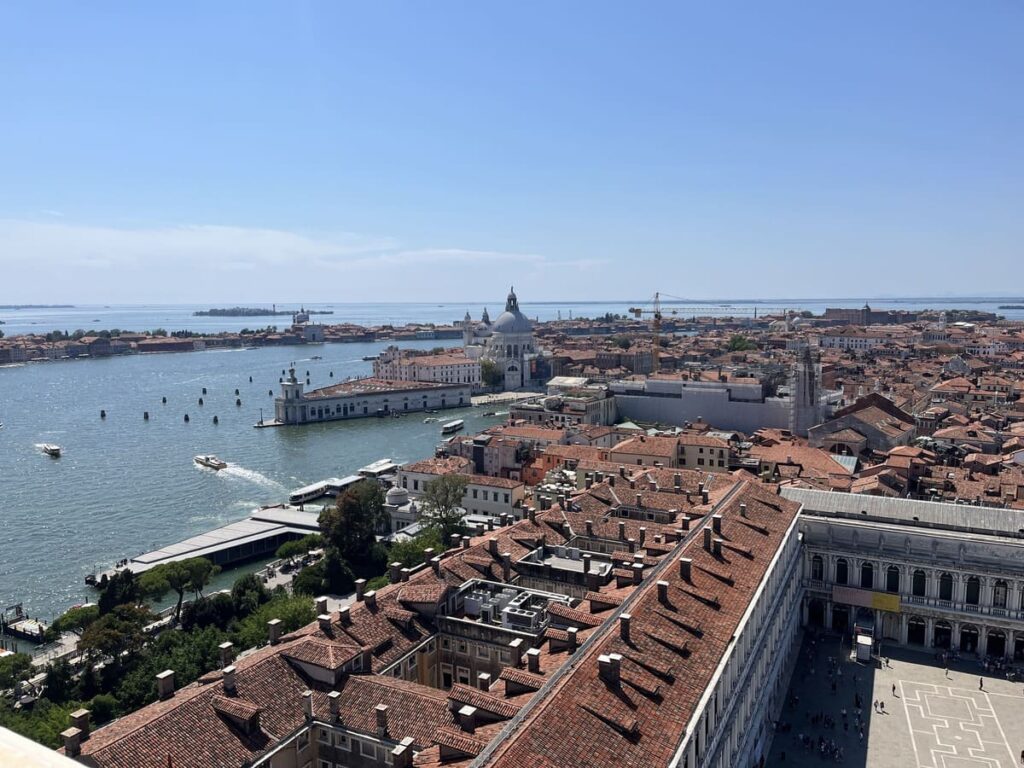
By Monika
Tips for Visiting Venice: What to Know Before Your First Trip.
Planning your first trip to Venice?
Then you’ve probably already heard a mix of opinions – that it’s crowded, confusing to navigate, expensive, or even overrated.
But honestly, Venice is one of those unique places that feels special and quite enchanting once you experience it for yourself.
Yes, the canals are beautiful. And, no, they don’t smell bad – at least they didn’t when I was there!
Yes, getting lost is part of the experience. And yes, there are a few things you’ll definitely want to know before you go.
After visiting Venice myself, I realized that a little preparation could make a huge difference in how much you enjoy the city.
From understanding how to get to AND around the city to knowing where to stay and what to look out for, these practical tips for visiting Venice will help you plan with confidence and truly enjoy its magic.
This post contains affiliate links to trusted products and services that I use and love myself. If you make a purchase through these links, I may receive compensation at NO EXTRA COST TO YOU. I appreciate your support! Also, as an Amazon Associate I earn from qualifying purchases. See the Disclaimer Policy and the Privacy Policy for more details.
Let’s start with the basics:
The main thing to know
The historical center of Venice is a pedestrian island! Completely car-free! There are no cars, motorcycles or buses. Even bicycles are not allowed!
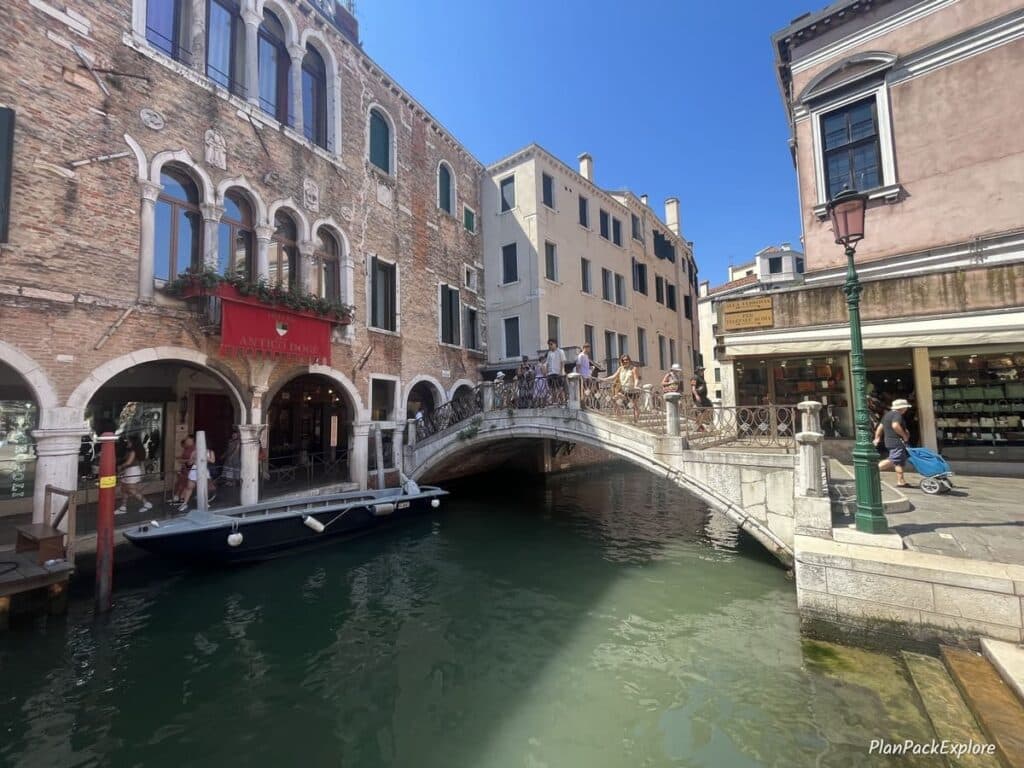
How to get to Venice?
That depends on where you’re arriving from and if Venice is your first stop or a part of a longer itinerary.
But there are three main ways you can get to Venice:
By plane
Most international flights will arrive at Venice Marco Polo Airport (VCE). From there, you can get to Venice historical center by
- taking a bus (ACTV) to Piazzale Roma or Venice Mestre. It’s about a 30-minute ride.
Depending on where you’re staying (more on that a little later in this article), you can either walk to your accommodation from Piazzale Roma or take the train from Venice Mestre (on the mainland) to Santa Lucia station (in the historical center, in the Cannaregio district) and get to your accommodation from there.
- Taking a water bus (ALILAGUNA)
Again, depending on where you’re staying, the ride will take about an hour to 1.5 hours. For example, the ride to San Zaccaria stop at the pier near Piazza (Piazetta) San Marco on the Grand Canal, takes about 1 hour 20 minutes.
You can buy the tickets either online, at the ticket office, even onboard on the ferry.
One adult ticket costs €18 and children under the age of 6 travel free with a paying adult.

- Taking a water taxi
This is the fastest but the most expensive mode of transportation.
Check all your options here.
By train
This is the option we chose. We arrived in Venice from Florence, so we took a direct high-speed train (Frecciarossa) from Firenze Santa Maria Novella to Venezia Santa Lucia, and it was a very pleasant, comfortable 2-hour 15-minute ride.

Venice is very well connected with other major cities as well.
Check train connections on Trenitalia or ItaliaRail.
Please remember to enter the Italian names of the cities in the ticket search boxes (Venezia, not Venice; Firenze, not Florence, etc.) – otherwise the system won’t find the train stations!
Helpful hint: remember that there are 2 main train stations in Venice – Mestre (on the mainland) and Santa Lucia (in the historical center). Make sure you get off at the correct one!
By car
Unless you already have a car and Venice is part of a larger itinerary, I do not recommend renting one to get to the city.
The main attractions are on the car-free Island, so you have to leave your car in one of the parking garages outside of the historical area and it can be a pricey hassle.
Your options are:
- A parking garage in Piazzale Roma (very busy)
- A parking garage in Tronchetto
- A parking lot in Venice Mestre
I would recommend leaving the car in Mestre and taking the train to Santa Lucia station. It’s only a 10-minute train ride.
Explore all parking options here.
How to get around Venice
By Venice, I mean the historic island.
Walk
The best way to get around Venice is on foot. Venice is very walkable and all the main attractions are relatively close to one another.
With that said, there are a few things to keep in mind:
- Venice is a maze of streets and alleyways separated by small canals.

You’ll have to go over multiple bridges and while they are not tall or difficult to cross, they are not particularly wheelchair/stroller friendly.
- I found that Google Maps works well for finding the major sites and may get a bit confused finding some off-the-beaten-path locations. Always double-check your directions. You may also want to carry an old-school paper map just in case.

One of those “hidden” locations was our apartment in Cannaregio – the host actually warned us not to trust Google Maps and instead sent us detailed directions.
I actually compared both routes as we were walking and Google Maps would have added a lot of walking time and had us cross the canal a few times unnecessarily.
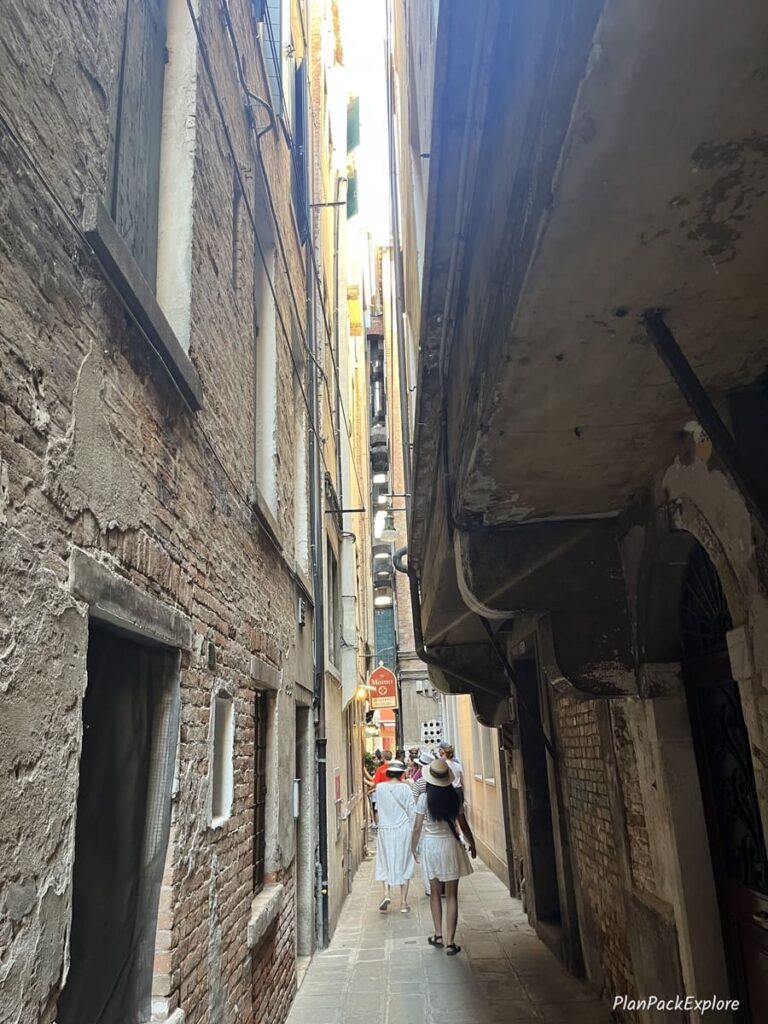
Now – once you drop your luggage and are off exploring, getting lost is not so bad – you may see some beautiful areas you may not have visited otherwise!
READ MORE: One Day in Venice? Here’s Exactly What to See and Do!
Vaporetto (water bus)
The other transportation option is the vaporetto (water bus).
It’s especially helpful if you plan on visiting the surrounding smaller Venice lagoon islands, like San Giorgio Maggiore, Murano or Burano.
Check the vaporetto routes and schedules here.
Venice public transportation passes
To use public transportation in Venice (both the mainland and the islands), including bus, tram, vaporetto and the regional trains between Venice Santa Lucia and Venice Mestre, it’s best to buy a transportation card, called Venezia Daily Pass.
It’s valid for 1, 2, 3 and 7 days and your “days” are counted in 24-hour increments starting from the first scan.
We had a 24-our Venezia daily pass the day we visited the Lagoon Islands (my guide to that adventure COMING SOON!) and it worked out great! It also goy is to Venice Mestre the next day, where we had to go to catch the bus to our next destination – Bled, Slovenia.
You can purchase those passes online or at any ticket office. We got ours at a ticket booth by the S. Lucia train station.
If you’d like to purchase online but find the official website confusing, you can also buy your pass or single tickets here.
Remember: you must activate your pass at the validation machine (on the pier, train platform or on the bus) to start counting your pass validity period, and then tap or insert each time you board or go through the turnstiles.
Venice Access Fee
This is a fairly new requirement, imposed primarily on day trippers to help manage overtourism and help preserve the city and fund necessary maintenance.
The fee is €5 if you pay it at least 3 days in advance and €10 if you pay it less than 3 days before your visit.
It applies to the historic center and NOT to the Venetian Lagoon islands.
If you’re staying overnight in the “Ancient City”, you don’t have to pay the fee, but you do have to register and obtain an exemption QR code.
➡️ Learn more about the access fee and check the calendar for the dates it’s valid on here.
➡️ Check the list of exemptions here.
➡️ Request your exemption QR code here.
Important: the Access Fee is completely separate from the Tourist Tax that you are required to pay in addition to your accommodation rate. The tax is typically paid on arrival, in cash, although some bigger hotels may accept it via credit cards and/or add it on during the booking process.
Where to stay in Venice
You can stay in the historic area or on the mainland.
Staying on the mainland may be less expensive but is also less convenient as you have to make your way to the island each day of your visit.
If you choose that option, I would try to stay near the Venice Mestre train station so that you have an easy and inexpensive way to get to the city’s attractions. As I mentioned above, it’s a short 10-minute train ride to Venezia S. Lucia station.
Explore your options on the map below:
I personally recommend staying in the historic center, and if you continue travelling after your visit and need easy transportation access, I’d stay near the Santa Lucia train station.
That’s what we opted for and rented a great apartment in the Cannaregio district.

It was an 8-minute walk from the train station and a nice location near the canal.
Staying on the island also allows you to go out in the evening and experience Venice at night, bustling with nightlife!
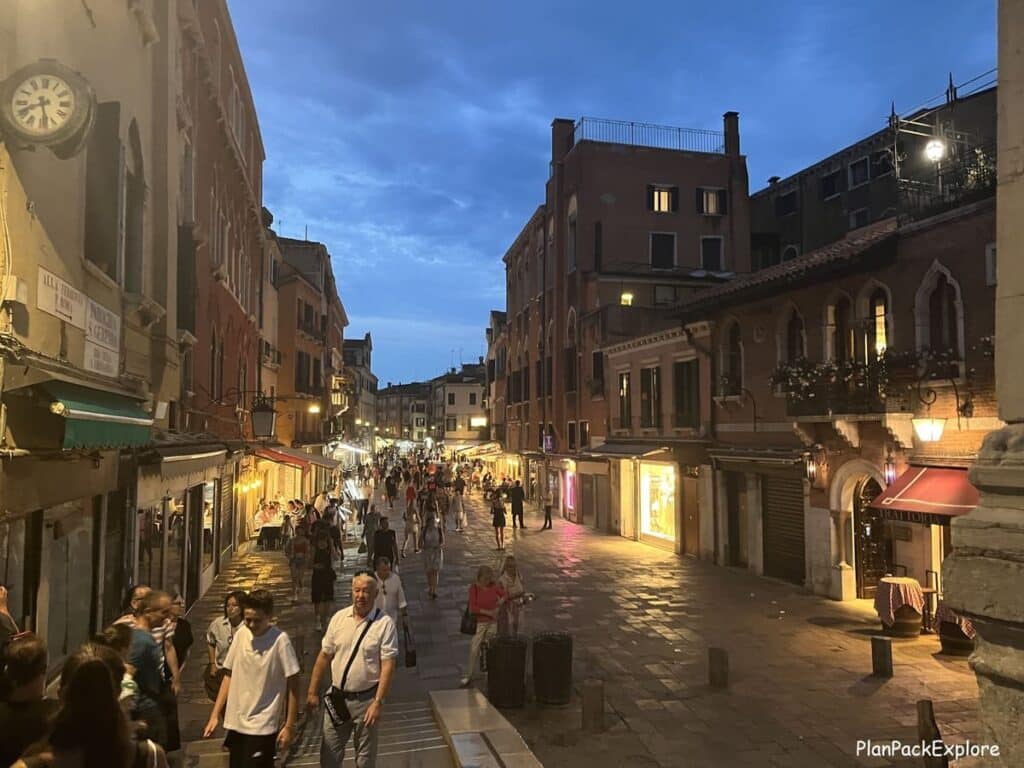
Here is a handy map with more choices:
What to know about Venice accommodations
These things apply more to apartments rather than big hotels, and are based mostly on our experience in Venice, but I fell are still helpful and worth sharing:
- Expect stairs and narrow hallways
We weren’t aware that the apartment would be two flights of narrow steps up and then, once you opened the door, there were a few more steps to the main floor.
Now, don’t get me wrong, we didn’t mind it at all, and found it completely charming and had some good laughs while maneuvering our luggage there, but if you have mobility issues, you may want to ask about the accessibility of your apartment.
- Unplug everything when you’re out exploring
Yes, you may be asked to unplug all devices, small appliances, fans etc. AND to turn off your AC when you’re not at the apartment. We were told it’s, due to potential fire hazards, as the houses in Cannaregio are very close together and flames would spread very quickly.
So close those shutters to keep the sun out and be ready to endure some heat when you come back to the room.
- Don’t expect an electric clothes dryer
This is true for most of Europe, actually – you may have a washer, but in most cases no dryer.
In our apartment, we did have a washer and were so glad about it, as we were able to wash our clothes after our hike in Cinque Terre the day before!
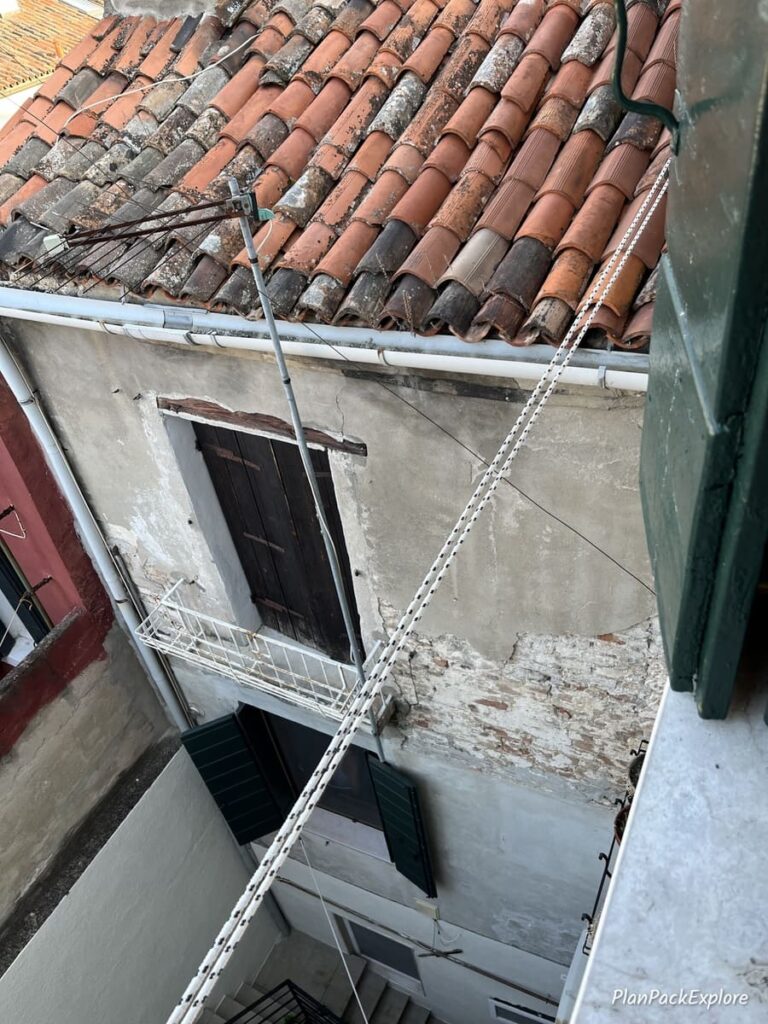
But to dry our clothes, we could use either the foldable drying rack or the clothesline outside our window.
We even had a box of clothespins and an instruction sheet ready on the kitchen table! I loved it – talk about a fully immersive cultural experience!

- Put your trash on a trash boat
Think of it as an equivalent to a trash pickup truck, except it’s a boat.
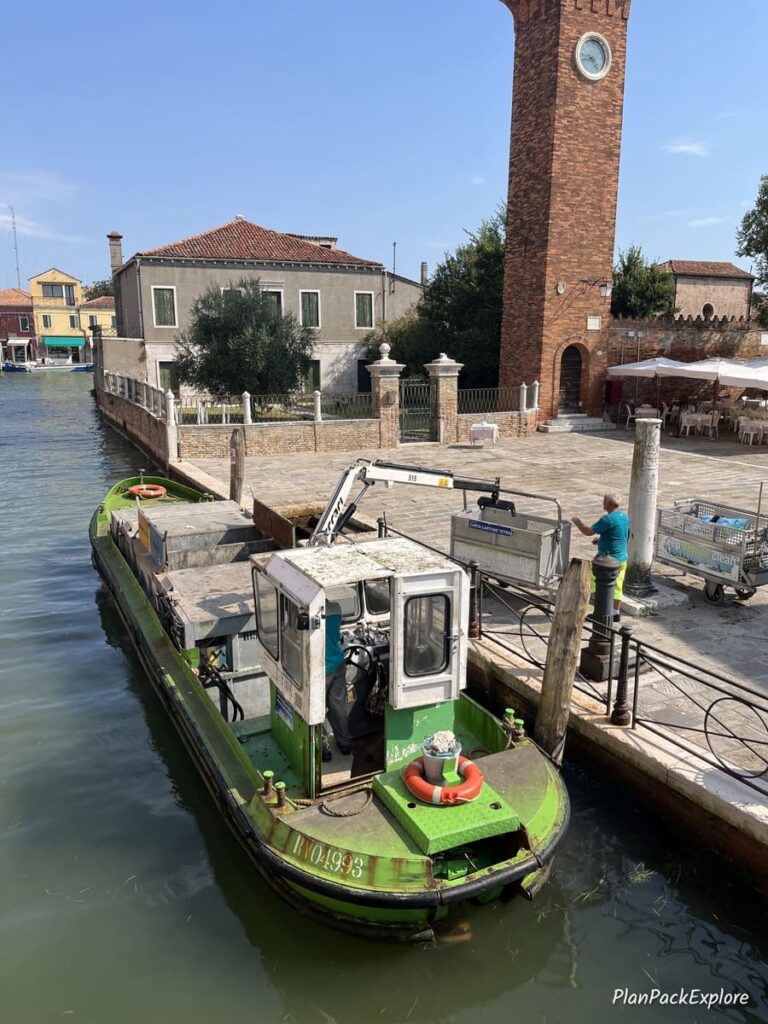
We were leaving our apartment too early in the morning to catch it, but you may be asked to bring the trash from your apartment to one of these boats on the canal upon check-out.
What not to do in Venice
Believe it or not, there are certain seemingly innocent things that, if done in Venice, can carry a hefty fine:
- feeding the pigeons
- swimming in the canals
- eating on the ground, like sidewalks, curbs and stairs
- littering
- walking around without appropriate clothing (i.e. in a bathing suit)
See the full list of “offenses” and accompanying fines here.
Book your activities early
This was the one thing I actually didn’t do (not sure how I missed it!) but other than the gondola ride, we didn’t have online reservations for anything else.
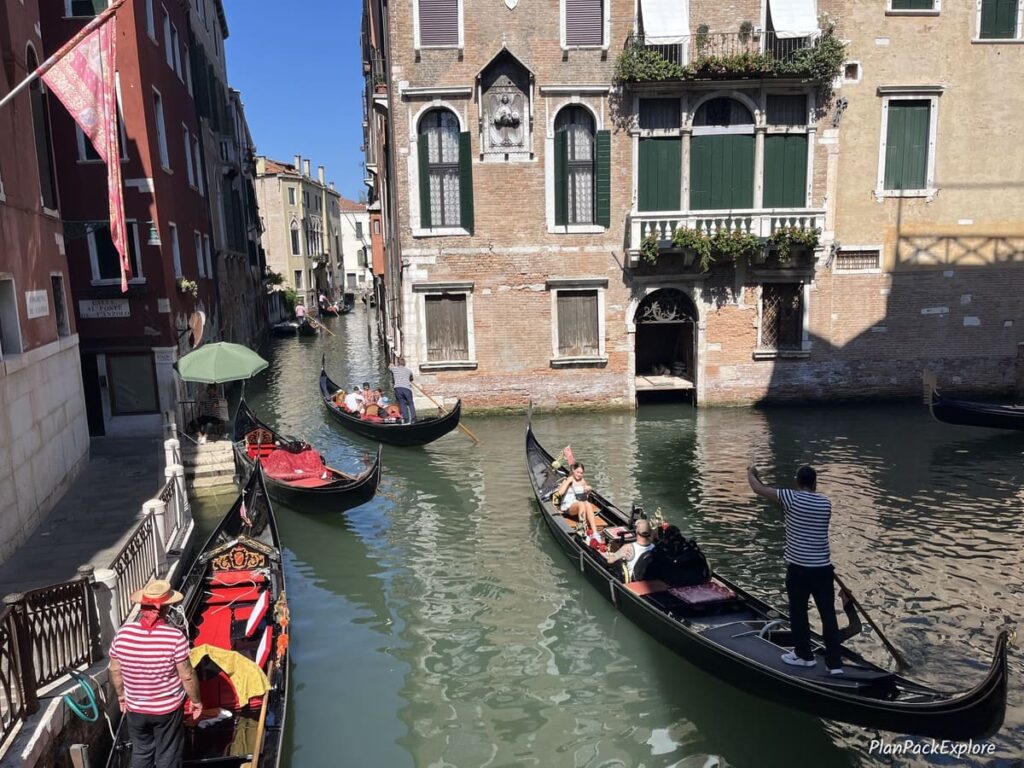
We were able to get tickets to St. Mark’s Basilica and the Bell Tower on the spot; we just had to wait in line a bit, but if you prefer to have our admission times pre-planned (I usually do, too!), you should book skip-the-line tickets to:
- Basilica di San Marco
- Campanile di San Marco (the Bell Tower)
- Doge’s Palace (and the Correr Museum)
- Peggy Guggenheim Collection
READ MORE: Things to See in Venice – What Not to Miss on Your First Visit.
Best time to visit Venice
As with most places, summer months (June – August) will bring the most crowds. But, if like us, you can only travel during school vacation times, you can still enjoy Venice.
We visited in August, and despite the crowds and the heat, we still had a great time. You just have to manage your expectations 🙂
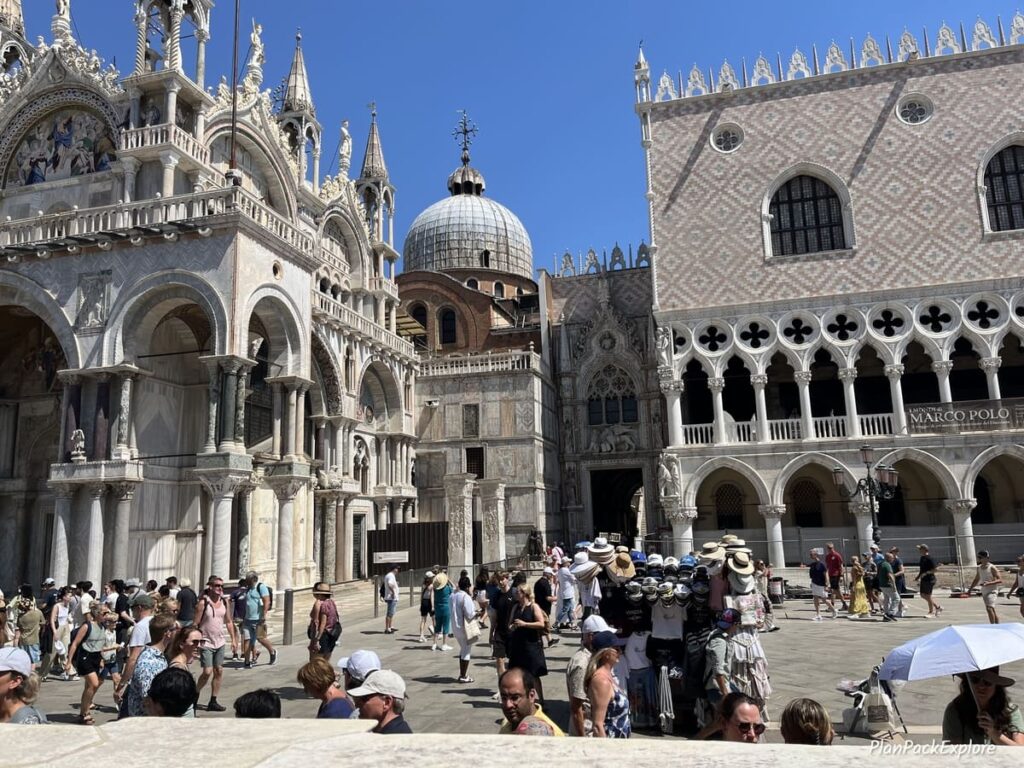
But if you can travel in the spring or fall, you’ll likely avoid both of those issues, and you’ll be able to take advantage of lower flight and hotel prices.
For winter travel to Venice, just keep in mind that January and February are typically the low tide months (acqua bassa) so you may experience dried out (and bit smally!) canals with the gondolas out of commission.
Also, Venice Carnival usually happens around the first two weeks in February, and the city may again get crowded and expensive. It may, however, be a great time to take part in a carnival mask making workshop!
For ideas on how to incorporate Venice into your Italian vacation, check out our 7- days Italy itinerary and see exactly how we spent our days!
F.A.Q.
Venice Access Fee is charged to same-day visitors entering the historic center on select dates. Overnight guests staying in Venice accommodations are generally exempt but should still register online for an exemption QR code.
Yes, Venice is very walkable. The historic center is completely car-free, so exploring on foot is the best way to experience the city. Just be prepared for lots of bridges, narrow alleyways, and uneven walking surfaces.
Many of Venice’s main attractions are within walking distance of each other, however, vaporetto water buses are very useful for:
– visiting Murano, Burano, and other lagoon islands
– traveling along the Grand Canal
– traveling to and from the airport
– avoiding long walks with your luggage
Usually, no. While you may occasionally notice odors during certain weather conditions or low tide periods, most visitors find the canals much cleaner than expected. We visited in August and even on very hot days did not notice any offensive smells.
Venice can be expensive compared to other Italian cities, especially for accommodations and dining near major tourist areas. However, you can lower your costs by:
– staying in Mestre vs historic Venice
– visiting outside peak season
– getting around on foot and using water buses if needed instead of water taxis
– eating away from Piazza San Marco
I really hope these Venice travel tips will help you prepare for your visit. It’s an amazing city and I’m sure you’ll love it!
READ MORE: 21 Practical Tips for Visiting Italy for the First Time.
If this is your first trip to Europe start here: How to Plan a Trip to Europe: My Favorite Travel Resources Revealed.
👉 Don’t forget TRAVEL INSURANCE! I don’t travel without it. Get a quote from my personal #1 choice – Travel Guard – or check more options here!

🛜 Stay connected during your trip with an eSIM like Airalo, Saily or Sim Local!


Let me help you plan your trip!
NEED A PLACE TO HOLD ALL YOUR TRAVEL NOTES TOGETHER?
Grab my handy PRINTABLE, FILLABLE TRAVEL PLANNER – keep track of flights, hotels, tours, daily itineraries – even your trip budget!
Access from any device and edit as needed or print for a hard copy!
BONUS! The planner has journal pages for your memories!
You may also like:
- 17 Things to See in Rome: An Honest First-Timer’s Guide.
- Murano, Burano and Torcello: an Amazing Day Trip to Venice Lagoon Islands.
- How to Spend 2-4 Days in Rome: Easy-to-Follow Rome Itinerary.
- 21 Best Things to Do in Florence: The Ultimate First-Timer Guide + Travel Tips.
- How to Plan a Perfect Pisa Day Trip from Florence (+ Pisa Leaning Tower Tips)
- Best Things to Do in Cinque Terre: Complete Guide + Tips for Your First Visit.
- 2-4 Days in Florence: A Realistic Florence Itinerary You’ll Actually Enjoy!
- How to Spend One Day in Cinque Terre: Itinerary Options and Practical Tips.

About Monika
An avid traveler and a passionate trip planner, mildly obsessed with being organized and prepared 🙂
Well aware of how precious travel time is, I’m here to share my experience and help you get the most out of your vacation time.
“Taking the hassle out of trip planning”
