By Monika
17 Best Things to See in Rome: An Honest First-Timer’s Guide.
If you’re planning your first trip to Rome, you’re in for something truly special.
It’s one of those cities where every corner feels like a history lesson, a movie set, and a postcard all at once – so it’s easy to feel overwhelmed trying to decide what to see.
That’s why I’ve put together this guide to the best things to see in Rome, so you can focus on the highlights that are truly worth your time.
Is it a list of EVERYTHING there is to see in Rome? Of course, not!
But it will give you a good mix of the iconic landmarks, the viewpoints that give you that “wow” moment, and a few places and experiences that really capture the magic of the city.
So let’s talk about what to see in Rome, especially for your first visit, and then I’ll tell you all about the logistics of getting to Rome, how to get around, where to stay and how much time you need.
This post contains affiliate links to trusted products and services that I use and love myself. If you make a purchase through these links, I may receive compensation at NO EXTRA COST TO YOU. I appreciate your support! Also, as an Amazon Associate I earn from qualifying purchases. See the Disclaimer Policy and the Privacy Policy for more details.
- 17 Best Things to See in Rome: An Honest First-Timer’s Guide.
- 1. The Colosseum
- 2. The Roman Forum and the Palatine Hill
- 3. Arch of Constantine
- 4. Pantheon
- 5. Trevi Fountain
- 6. Spanish Steps
- 7. Vatican Museums
- 8. St. Peter's Basilica
- 9. Castel Sant’Angelo
- 10. Piazza del Popolo
- 11. Villa Borghese & Galleria Borghese
- 12. Piazza Navona
- 13. Victor Emmanuel II National Monument
- 14. Take a pizza/pasta making class
- 15. Take a food tour
- 16. Take a walking tour
- 17. Take a day trip
- Rome attractions map
- How to get to Rome
- How to get around Rome
- What about the Roma Pass?
- Where to stay in Rome
- Best time to visit Rome
- How much time do you need in Rome?
Let’s start exploring!
1. The Colosseum
When we talk about iconic landmarks in Rome, the Colosseum (Colosseo) definitely tops the list!
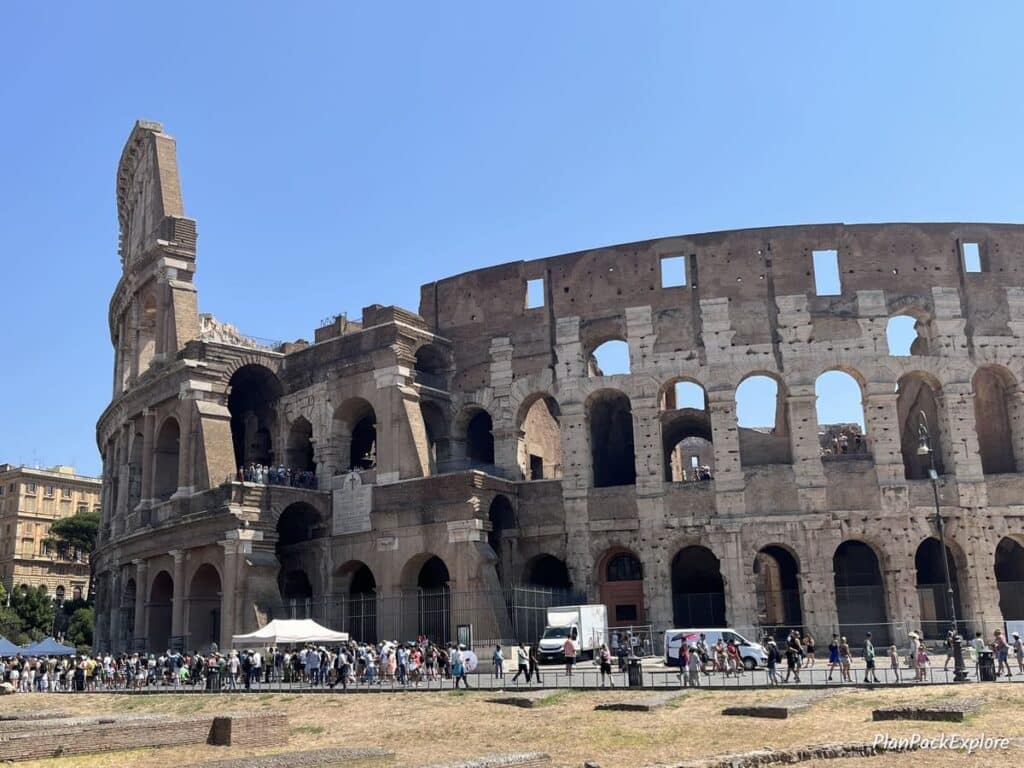
It’s a historic amphitheater, best known for the gladiator games hosted there in ancient times.
How to get to the Colosseum?
The Colosseum is located in the heart of the historic center of Rome and is easily accessible on foot and by public transportation.
The closest metro station is “Colosseo” on the blue line “B”.
We stayed near the Termini train station, and during the day we walked to the Colosseum (about 25 minutes), and another time we took the metro (2 stops) to see it at night (more on that later in the article).
Colosseum tickets
I recommend buying the Colosseum tickets in advance on the official website.
As I explained in my “Tips for your first visit to Italy” guide, they sell out quickly, so book as soon as you know your itinerary.
There are different ticket options.
The basic ticket gives you access to the Colosseum, the Roman Forum and the Palatine Hill, and costs €18 per adult, with discounts for EU students and Roma Pass holders.
There are also tickets giving you access to the Colosseum underground, the Arena, and the Colosseum at night.

We had the basic ticket and were happy with what it covered. While we didn’t go onto the arena or into the underground, we could see both areas and felt it was enough.

Good to know: the official Colosseum website can be a little temperamental and doesn’t always load properly. Setting your server to “Italy” instead of the “fastest connection” for the time you need to visit the site may help.
If you have trouble accessing the official website or the tickets are sold out, check Get Your Guide or Viator – you may pay just a little more, but there is more availability.
That’s what I had to do since I was late booking our tickets.
Most of the tickets also offer an audio guide, which is a great source of information about the history of this incredible place.
Helpful hint: you can also download the official “My Colosseum” app, where you also have access to an audio guide in many languages and you can use it to purchase your tickets.
The tickets are timed, so plan your visit carefully – you won’t be admitted if you’re late – you won’t be allowed early either – we tried!
If you’d rather visit with a guided tour, there are many great options – check below:
How much time do you need to visit the Colosseum?
If you have a basic access ticket, I would allow at least 90 minutes for your visit. You’ll have time to explore and wait for the crowds to disperse to take some photos.
If you’re also visiting the arena and/or the underground, add more time accordingly – about 30 minutes for the arena and 45 minutes for the underground.
Opening hours: it opens at 8:30 am and the closing times vary by season – check updated information here.
Colosseum at night
Make sure to come back in the evening when the Colosseum is lit up and looks even more majestic.


There are usually artists performing nearby, and we even saw a wedding taking place there. It becomes a unique blend of ancient history and modern entertainment!
2. The Roman Forum and the Palatine Hill
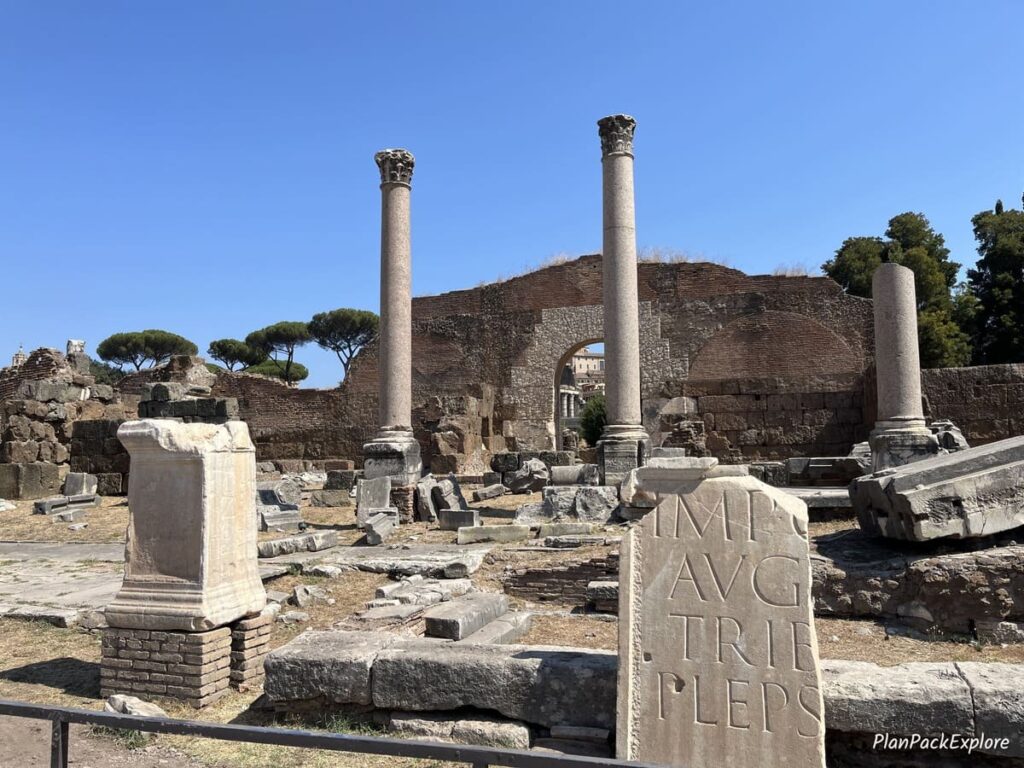
The Roman Forum (Foro Romano) used to be the center of activity for Roman citizens. It is now home to ruins of political, religious, and commercial buildings as well as some monuments.


It is pretty incredible to walk around those ruins and imagine what life used to be like here in ancient times.
How to get to the Roman Forum
It is located right next to the Colosseum. You can see it from the amphitheater.

Roman Forum tickets
Your Colosseum ticket also gives you access to the Roman Forum and you can visit it before or after the Colosseum.
The visit isn’t timed – you just need to make sure you have enough time to explore, as you’re only allowed one entry. So you can’t visit some areas and then come back for more.
We visited after the Colosseum to not feel rushed, and I do recommend that order.
Take your time walking through the alleys among ancient ruins – it’s beautiful.
If you just want to visit the Roman Forum without the Colosseum access, you can purchase the Super Pass ticket – it’s not timed, you can use it any time, and it’s valid for one day once it’s activated.
Learn more about the origins and history of the Roman Forum on the official website.
Check the tickets and tours below:
Then make your way to the Palatine Hill (Il Palatino or Colle Palatino in Italian) – one of the seven hills of Rome and the oldest part of the city. It offers amazing views of the area and more ruins of temples and palaces to admire.

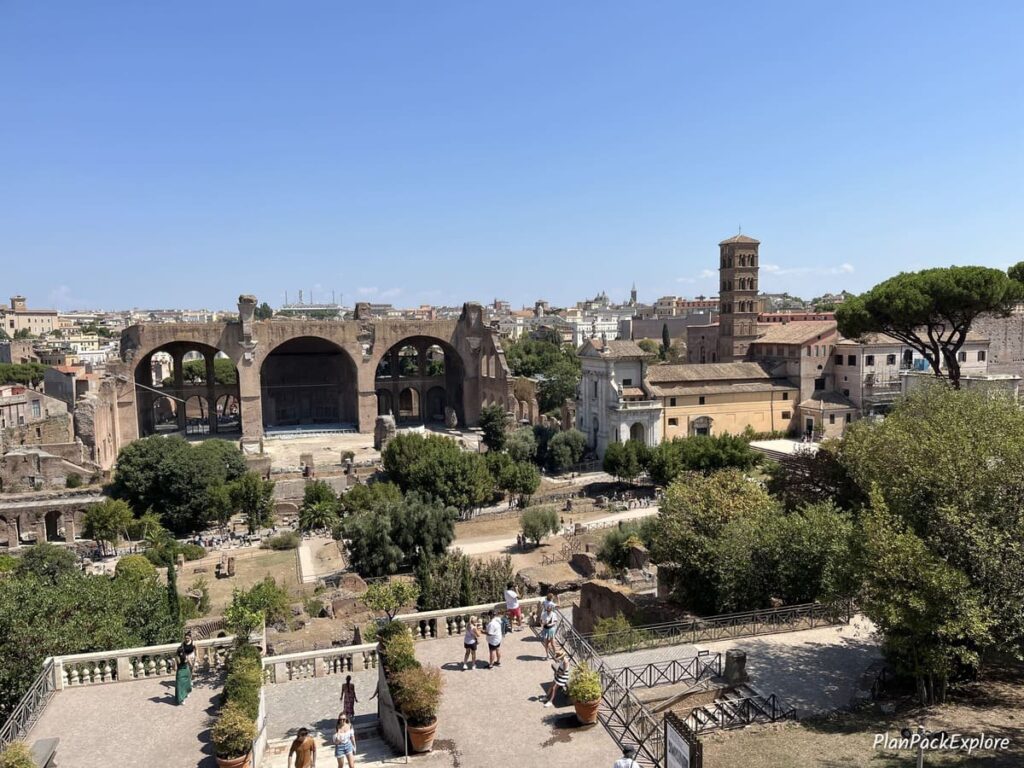
How much time do you need at the Roman Forum and the Palatine Hill?
We were advised by a friendly staff member to allow at least 90 minutes for the visit.
That’s why we stepped out of the line and waited till after the Colosseum, as we did not have that time. And you do need it. The area is huge, and you can easily spend 2 hours there.
Opening hours: It opens at 9 am and the closing times vary by season – check updated information here.
Helpful hint: access to the Colosseum, the Roman Forum, and the Palatine Hill is FREE every 1st Sunday of each month.
3. Arch of Constantine

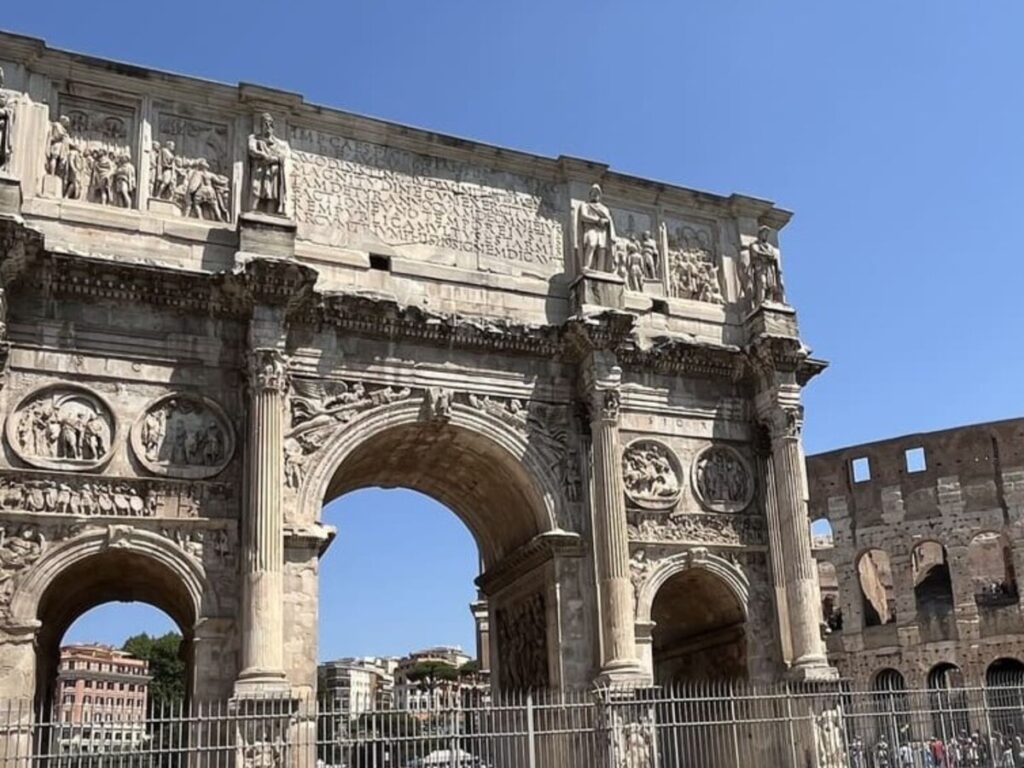
Don’t miss the Arch of Constantine (Arco di Costantino) – sitting between the Colosseum and the Roman Forum, it’s the best-preserved triumphal arch in Rome.
4. Pantheon

The Pantheon (Temple of All the Gods) is a former ancient Roman temple now converted to a Catholic Church – Basilica of St. Mary and the Martyrs (Basilica Santa Maria ad Martyres).
It’s most famous for its dome with an open hole in its center called “the oculus”, designed to be the primary source of light.

How to get to the Pantheon
Walking around the city is the best way to explore it but if you need to use public transportation, you can take the red line “A” of the metro to either Barberini or Spagna station or one of the many bus lines (40, 62, 63, 64, 85, 160, 492). The best bus stops are Largo di Torre Argentina or Corso Vittorio Emanuele/Navona.
Pantheon tickets
Tickets to the Pantheon cost €5 per adult and €2 if you’re a EU student and are free for minors under 18.
You can purchase them online on the official website, at the self-service kiosk, or at the ticket office right at the Pantheon.
We had some trouble with the payment on the official site and eventually had to use PayPal to purchase the tickets. If it’s giving you a hard time, you can also get them here.
Pantheon tickets are timed and they do sell out in the peak season, so try reserving them in advance.
Helpful hint: access to the Pantheon is FREE every 1st Sunday of each month.
How long do I need at the Pantheon?
If you already have a ticket, 30-60 minutes is enough. Otherwise, add some time to wait in line to pay for the entry.
Opening hours: 9 am till 7 pm (check for updated information here)
5. Trevi Fountain

The Trevi Fountain (Fontana di Trevi) is a stunning Baroque fountain in Rome, located on Piazza di Trevi at the junction of 3 roads: Via delle Muratte, Via dei Crociferi, and Via Poli – and that’s where the name comes from.
Besides being a symbol of Rome and one of its most photographed sights, it’s also the endpoint of a working aqueduct (Aqua Virgo), providing drinking water to the Eternal City.
The fountain is attached to the Polli Palace (Palazzo Polli).
How to get to the Trevi Fountain
If you’re not up for a stroll along the city streets, you can take the red line “A” of the metro to the Barberini station or one of the many bus lines (52, 53, 62, 63, 71, 83, 85, 117, 160, 492). The best bus stop is Tritone/Fontana Di Trevi.
Trevi Fountain tickets
As of February 2nd, 2026, there is a fee of €2 to enter the area on the lower level, next to the basin of the fountain, during visiting hours.
The fee was implemented as a way to manage the crowds and preserve the site.

You can buy the tickets online on the official website, by scanning a QR code on signs posted near the fountain, or as part of a walking tour.
Access is free for residents, children under 5, and visitors with disabilities.
It is also free outside of the visiting hours, and if you stay at the level of Piazza di Trevi and do not go down to the basin.
How long do I need for the Trevi Fountain?
Honestly? It’s hard to say at this time.
If you already have your ticket, you’ll have to get in line (the traffic to the basin is now one way) and enter as the line moves. This system was not in place when I visited, so I’m not sure how fast the line moves and if there is a time limit to spend at the basin.
Prior to implementing the new fee and traffic flow, 30 minutes was more than enough for this experience.
Good to know: across the street from the Trevi Fountain (to your right if you’re facing the water), is a church that we missed – The Church of Santi Vincenzo e Anastasio a Fontana di Trevi. It has one unique feature – an underground crypt with 22 jars of preserved internal organs of deceased popes. A little gruesome, but definitely interesting! While the crypt is not available to visitors, the church is still worth a visit. So don’t miss it! Read more about it here.

6. Spanish Steps
Spanish Steps is a historic 18th-century staircase leading from Piazza di Spagna up to the church called Trinita di Monti. That’s where the Italian name for the Steps comes from: “Scalinata della Trinità dei Monti” or “Scalinata di Trinità dei Monti”.
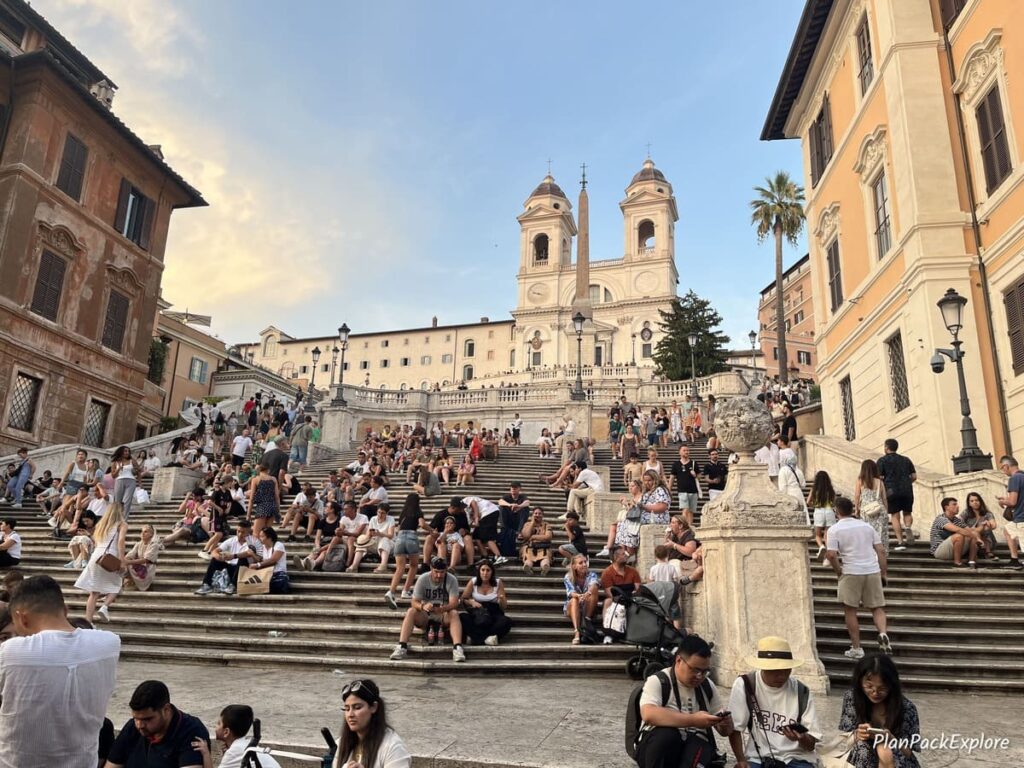
There are 135 stairs to climb.
At the base of the Steps, in Piazza di Spagna, you’ll find a beautiful fountain, called Fontana della Barcaccia, and some high-end stores.

Spanish Steps were a filming location for some iconic productions, like “The Roman Holiday”, “The Talented Mr. Ripley” and “Mission Impossible”, just to name a few.
How to get to the Spanish Steps
You can walk from wherever your journey through Rome took you before this spot, or take the metro red line “A” to the Spagna station. You can also take bus lines 51, 85 160 to the Tritone/Fontana Di Trevi or S.Claudio bus stop.
7. Vatican Museums

The Vatican Museums are located in the Vatican City, a tiny country inside the city of Rome.
It is a complex of 26 museums, showcasing a massive art collection, from ancient Egyptian sculptures to Renaissance art in Raphael Rooms, and my favorite – the Gallery of Maps. And so much more!
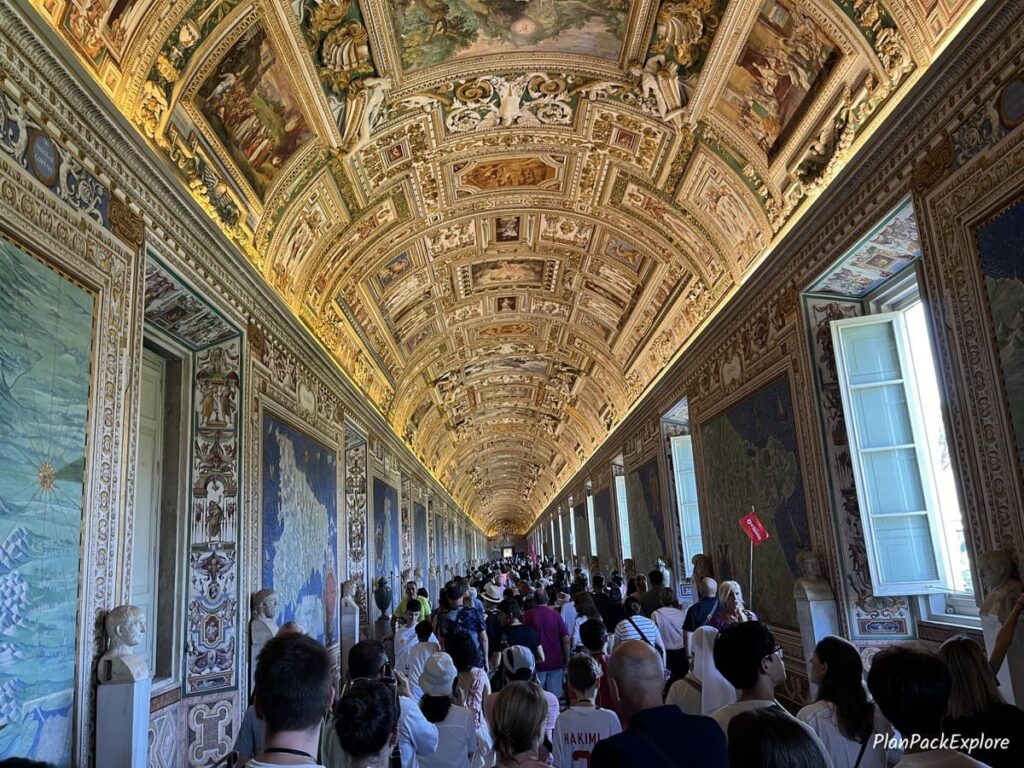
And at the very end of your journey, you’ll see the extraordinary Sistine Chapel.
You can take a break from the museum rooms and get some fresh air by stepping out to a beautiful courtyard with alleys, an outdoor cafeteria and the famous bronze sculpture called Sphere within Sphere (Sfera con Sfera). Watch it rotate, just like the Earth!

How to get to the Vatican Museums
The best way to get to the Vatican Museums is by metro. The closest stop is Cipro (slightly closer to the museum entrance) or Ottaviano – both on the red line “A”.
You can also take a bus (49 stops the closest to the entrance, or 32, 81, 982, 492, 990) or tram #19.
Vatican Museum Tickets
You need tickets to enter the museums. Please only buy them from the official website or a reliable third-party seller, like Get Your Guide or Viator.
Keep in mind that the official website tickets have to be booked well in advance and cannot be rescheduled or refunded. The third-party tickets I linked above give you more flexibility and have a 24-hour cancellation policy.
You’ll see plenty of people in front of the main entrance offering you “skip the line tickets” – I don’t recommend buying from them.
How long do you need for the Vatican Museums?
I would allow at least 2-3 hours to walk through the museums but you can easily spend half a day (or even a full day) if you’re an art enthusiast.
Opening hours: Monday through Saturday 8 am till 8 pm and 9 am till 2 pm every last Sunday of the month. Check the updated information here.
Good to know: make sure you’re properly dressed for your visit. Your arms and legs should be covered. It is strictly enforced, especially before you enter the Sistine Chapel. Read more here.
8. St. Peter’s Basilica
St. Peter’s Basilica (Basilica di San Pietro) is also located in the Vatican City, right in St. Peter’s Square (Piazza San Pietro).
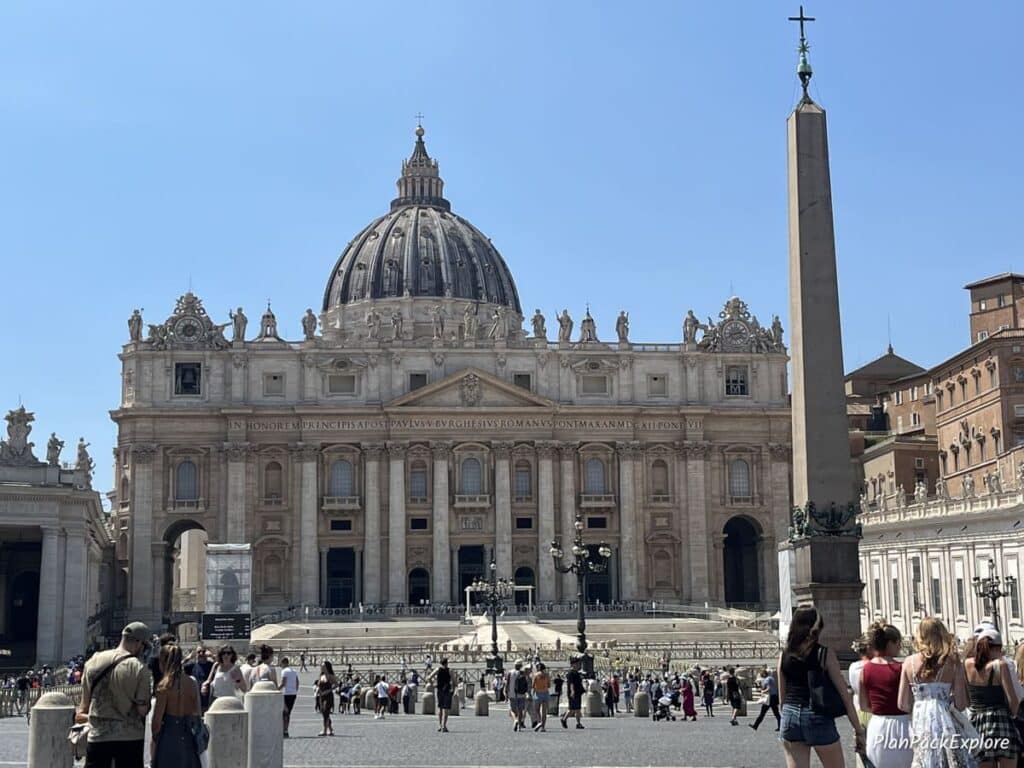
It is a majestic structure, designed in part by Michelangelo, and given the name of one of Jesus’s disciples (St. Peter), who is believed to have been buried there.
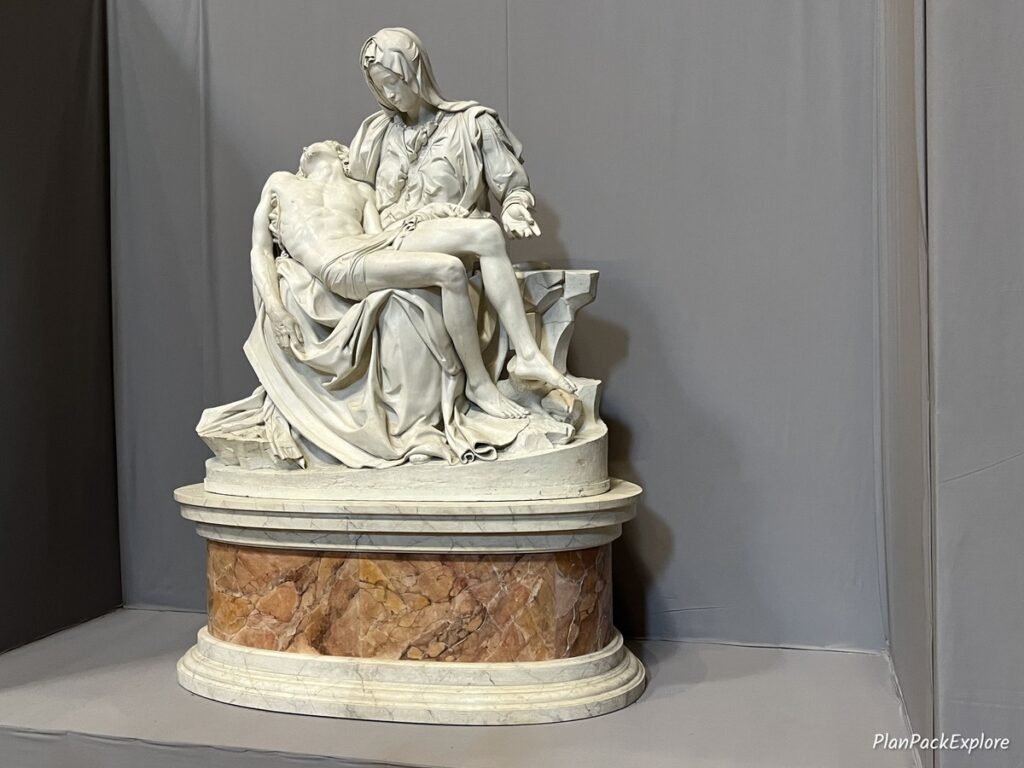
One of the main attractions inside is Michelangelo’s Pieta sculpture, but the entire church is amazing.
It is also where you can see the Pope during holiday masses and other religious events.
In fact, you can attend a papal audience by either picking up your tickets from the Swiss Guards in the square on a first come first serve basis or by submitting a special request form to reserve the tickets.
If you’d like to secure a hassle-free reservation, you can do that here.
How to get to St. Peter’s Basilica
If you’re coming from the Vatican Museums you can just walk around the Vatican wall for a few minutes to the main entrance to the square.
If you’re taking public transportation, just follow the directions above for the Museums.
Do I need tickets for St. Peter’s Basilica?

No, access to St. Peter’s Square and the Basilica is FREE. The only thing you need to pay for is climbing the church’s dome.
There is usually a line to enter the Basilica, but don’t get discouraged – it moves fast!
You also have to follow the dress code (knees and arms should be covered). If you’re not covered enough, you will be given a scarf when you get in line to enter.
My detailed guide to visiting the Vatican City is COMING SOON!
How much time do I need at St. Peter’s Square
I would allow at least 2 hours to explore everything (with some time built in for waiting in line to enter the Basilica).
Opening hours: 7 am till 7 pm. Check updated information here.
9. Castel Sant’Angelo

Castel Sant’Angelo is also known as the Mausoleum of Hadrian (Mausoleo di Adriano) and is a round fortress originally built for the Roman Emperor Hadrian. That’s also where the Emperor is buried.
According to the official website, the Castle later served as “a fortress, tribunal and prison of the Papal States”.
It is now the National Museum of Castel Sant’Angelo, and inside you can walk up the spiral ramp to Hadrian’s burial chamber and walk through various rooms, including papal apartments.
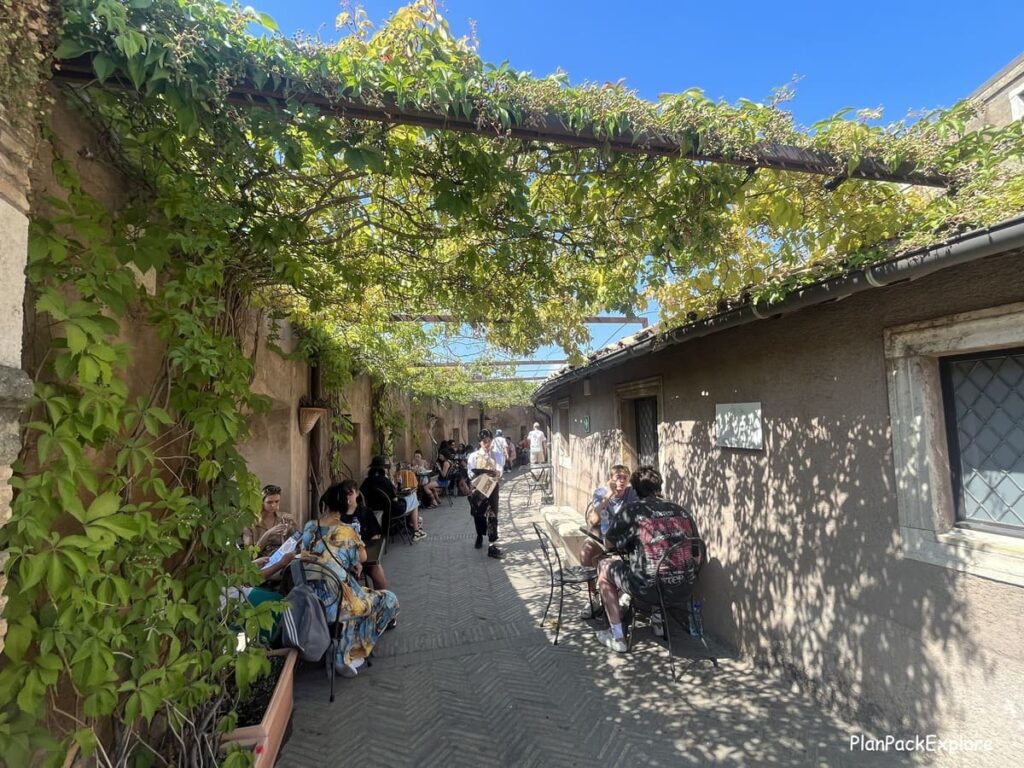
You can have a snack and some coffee as you walk around and admire some great views.
The best views of the Vatican and the surrounding area are from the large terrace at the highest level.
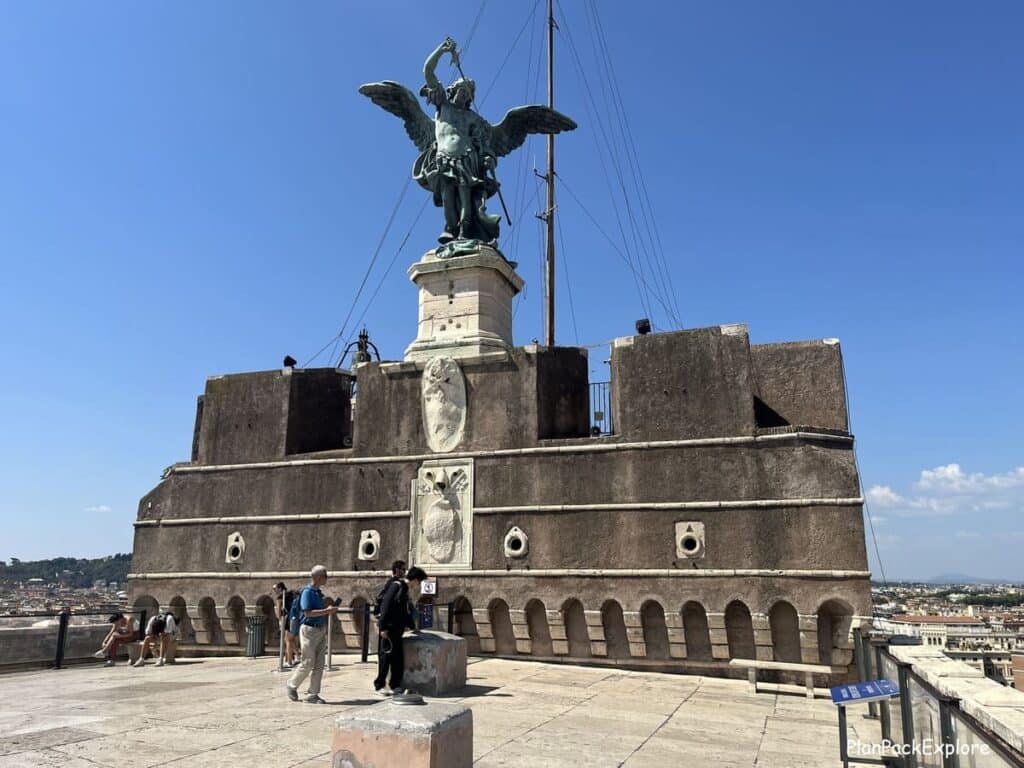
How to get to Castel Sant’Angelo
Castle Sant’Angelo is located in the center of Rome, on the right bank of the Tiber River, about 10-15 minute walk from the Vatican. It is actually connected directly to the Vatican via a passage called “Passetto di Borgo” (currently closed to the public).

If you walk to the Castel from the Vatican, you’ll cross a beautiful pedestrian bridge – Ponte Sant’Angelo. That’s what we did, and it was a lovely walk.

You can also take the metro to the Ottaviano station or take a bus (lines 23, 115, 271, 280, 62, 982, 40, 34, 49, 190F) to the Paola stop.
Castle Sant’Angelo tickets
You do need to purchase tickets to visit the Museum. When we visited in 2024, we were able to just purchase them onsite at the ticket window, however as of early 2026, the timed ticket system was implemented, so you should buy the tickets online to reserve your time slot for entry.
Tickets start at €20 per adult for a basic ticket with an audio guide, with significant discounts for EU students (cost is €2). Minors under 18 enter for free.
Good to know: tickets purchasef through the official website give you 48 hours reschedule/cancellation police and offer the EU student discount. Tickets purchased through Get Your Guide offer a 24-hour cancellation policy, a discount for youth 6-17, and no EU student discount. So you can choose which platform is more beneficial for your visit.
Helpful hint: Castel Sant’Angelo is FREE to enter on every first Sunday of the month
How much time do I need at Castel Sant’Angelo
Typically one hour is enough to tour the Castle. If you plan to sit at the café along the way, just add some extra time.
Opening Hours: Tuesday to Sunday, from 9.00 a.m. to 7.30 p.m. Check the updated information here.
You can also visit the Museum with a guided tour.
10. Piazza del Popolo
Piazza del Popolo is a large, oval-shaped historic plaza in the center of the city.

Upon entering via Porta Flaminia – an arched gate on Via Flaminia – you’ll find a tall monument in the center (Obelisco Flaminio), the famous twin churches: Santa Maria Montesanto and Santa Maria dei Miracoli, and the iconic Fountain of Neptune (Fontana del Nettuno).
Near the main gate (also known as Porta del Popolo) you can visit the Leonardo da Vinci Museum located in the underground of yet another Piazza del Popolo church – Basilica Santa Maria del Popolo.
It has many interactive exhibitions dedicated to his work and art, including the famous painting “The Last Supper”. Purchase tickets on the official website or here.
While we ran out of time to visit this plaza and the nearby Villa Borghese (read below) during our most recent trip (jet lag caught up with us quicker than we expected!), I did see it during my first visit quite a few years ago and definitely recommend including it in your Rome itinerary.
How to get to Piazza del Popolo
The best way to get there is on foot, especially of you’re already out walking to other Rome attractions. It’s about 20 minutes from Piazza Navona or the Trevi Fountain and only 10 minutes from the Spanish Steps.
If you’re taking the metro, the best stop is “Flaminio” on the red line. “A”
How much time do I need for Piazza del Popolo?
I would budget about an hour to walk around the plaza.
11. Villa Borghese & Galleria Borghese
If you need a break from the busy atmosphere of the city, Villa Borghese is the place you need.

It’s a large park in the center of Rome, right by Piazza del Popolo, where you can walk around on many tree-lined paths, rent a boat on the lake or visit the Bioparco di Roma Zoo.
Villa Borghese is also home to Galleria Borghese – one of Rome’s many renowned museums. Be sure to book your gallery tickets well in advance, as they sell out quickly.
How to get to Villa Borghese
It’s only a 5-minute walk to the park gate from Piazza del Popolo and about 12 minutes from the Spanish Steps.
You can also take the metro (red line “A”) to either “Spagna” or “Flaminio” station.
Galleria Borghese tickets
The official website recommends purchasing the tickets on Tiquets.com or Get Your Guide.
They are timed tickets, and you have 2 hours to spend at the gallery. Tickets start at around $50, depending on the option you choose. There is a small discount for minors under 18.
How long do I need for Villa Borghese?
If you’re visiting both the gallery and the gardens, plan on at least 3 hours – 2 in the gallery and 1 in the gardens.
The gardens are large, so it can easily be a half-day outing.
Add more time of you plan to visit the zoo – keep in mind that it requires a ticket to enter.
Opening hours: The gallery is open Tuesday to Sunday, 9 am to 7 pm.
Helpful hint: Galleria Borghese is FREE on the first Sunday of each month, however you still have to reserve your time slot online and pay the €2 reservation fee.
12. Piazza Navona
Piazza Navona is a long plaza built on the site of the ancient Stadium of Domitian (Stadio de Domiciano).

It’s famous for its three fountains: the Fountain of the Four Rivers (Fontana dei Quattro Fiumi) in the center, with the Moor Fountain (Fontana del Moro) and the Fountain of Neptune (Fontana del Nettuno) at the ends of the square.
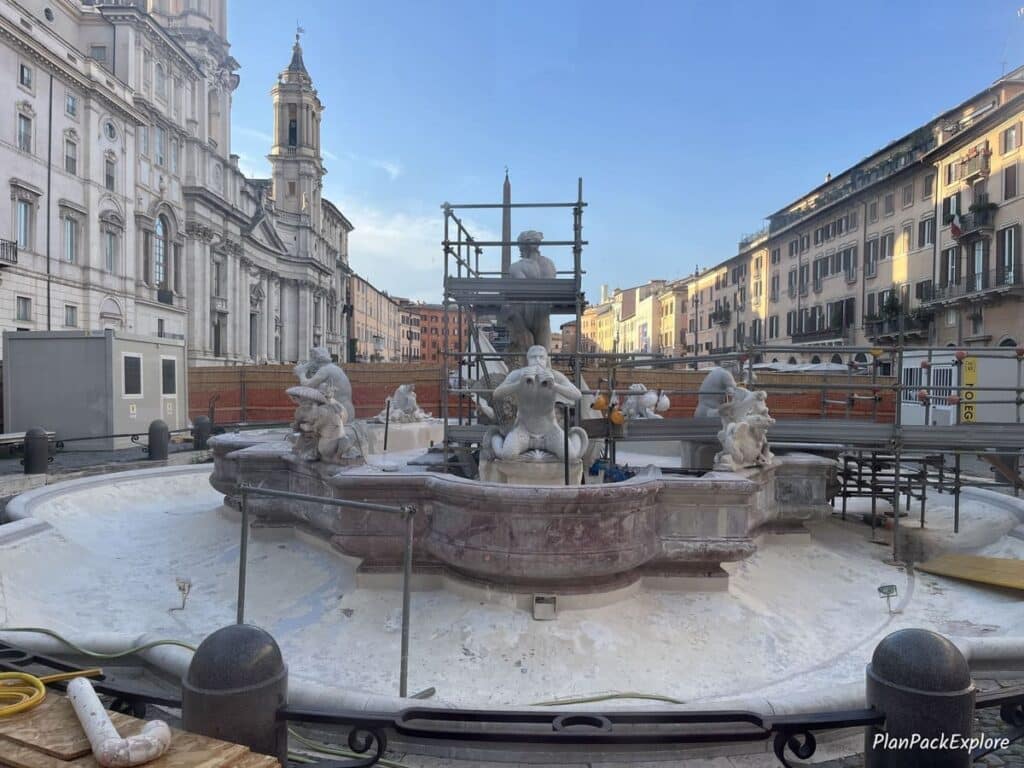
It’s also a lively place where street performers and vendors like to show off their art.
During my most recent visit the plaza was under construction – the fountains were being renovated for the 2025 Jubilee festivities, so I could only snap some photos through the fence, but I do remember it from my prior visit and still have the art we bought from one of the artists on my wall.
How to get to Piazza Navona
Again – walking is best, as it’s only a 13- minute walk from the Trevi Fountain, 16 minutes from the Spanish Steps and only 5 minutes from the Pantheon.
How much time do you need at Piazza Navona?
That’s entirely up to you! For a quick walk around, 30 minutes should be enough, but you may want to stay longer and enjoy the atmosphere,, live performances and the street art vendors.
You can also grab some great Italian pizza at the nearby (1 minute walk) Osteria Pasquino – or you can make it yourself!
Read section #14 for more details!
13. Victor Emmanuel II National Monument

This historic building is located in Piazza Venezia and is dedicated to Italy’s first king, Emmanuel II, and is also known as the Altar of the Fatherland, Vittoriano Monument, or by its nicknames: “the wedding cake” or “the typewriter”.
The nicknames refer to the characteristic shape of the building.
Inside you’ll find a museum and a Tomb of an Unknown Soldier, but the most alluring part of the monument is the rooftop terrace, offering amazing views of the nearby Colosseum, the Roman Forum, and much further beyond. The terrace can be accessed by a panoramic glass elevator.
Learn more here.
How to get to Vittoriano
The monument is very close to the Colosseum and the Roman Forum (only an 11-minute walk from the Forum – you can actually see the sculptures on the roof from there). It’s also just a 13-minute walk from the Pantheon.
If you’re taking the metro, the best stop is the “Colosseo” on the blue line “B”.
Tickets for Victor Emmanuel II National Monument
To access the rooftop terrace and all the exhibits inside the building, you need to purchase a ticket.
It costs €18.00 per adult, with discounts for EU students under 25. Minors under 18 enter for free. If the tickets are sold out on the official website, you can buy them here.
14. Take a pizza/pasta making class
Pizza making class was my daughter’s request for this trip and it ended up being a great experience – fun, educational and truly delicious.
We met our small group and our chef at Osteria Pasquino right by Piazza Navona.

Then we made the pizza dough under the chef’s watchful eye, chose the toppings and put our pizzas in the oven. All while sipping prosecco!


Then we sat at lovely outdoor tables, and were served our pizzas with some limoncello. A perfect ending to our first day in Italy!
If you’d like the same amazing experience, book our class!
Prefer to make pasta? There are so many classes to choose from!
15. Take a food tour
To immerse yourself in the wonderful Italian cuisine, consider taking a Food Tour – most of them are held in the charming, historic Trastevere neighborhood, but also in Campo de’ Fiori Plaza near Piazza Navona.
Enjoy pasta, pizza, cheese, meats, gelato, Italian street food and more!
16. Take a walking tour
If you’d rather explore Rome with a guide, you can take a free walking tour – they are of different lengths and cover different sights.
The best-reviewed free walking tour companies in Rome are:
GuruWalk and Rome’s Ultimate Free Walking Tour
For more choices, explore paid walking tours of Rome and choose from various routes and times of day. The moonlight tour and ghosts, legends, and mysteries tour look fun!
17. Take a day trip
Rome is a great base for some fun day trips.
If you need a break from the city, plan a day at the Amalfi Coast.
For more ancient history experiences, visit Pompeii and Mount Vesuvius. We visited both many years ago and it was a fabulous, memorable trip.
Florence and Pisa are also a short train or car ride away. If you can’t spend more time there, a day trip is definitely worth your time. We loved both!
Rome attractions map
Find all the attractions on this interactive map to plan your perfect Rome itinerary:
Click on the box in the top left corner for a full list, then on each icon for directions.
How to get to Rome
Depending on where Rome fits into your overall European itinerary, you’ll most likely be arriving either by plane or by train.
By plane
You’ll arrive at Rome Fiumicino International Airport. From there, you can take a train into the city or use an airport transfer service arranged by your hotel or book a ride with Welcome Pickups.
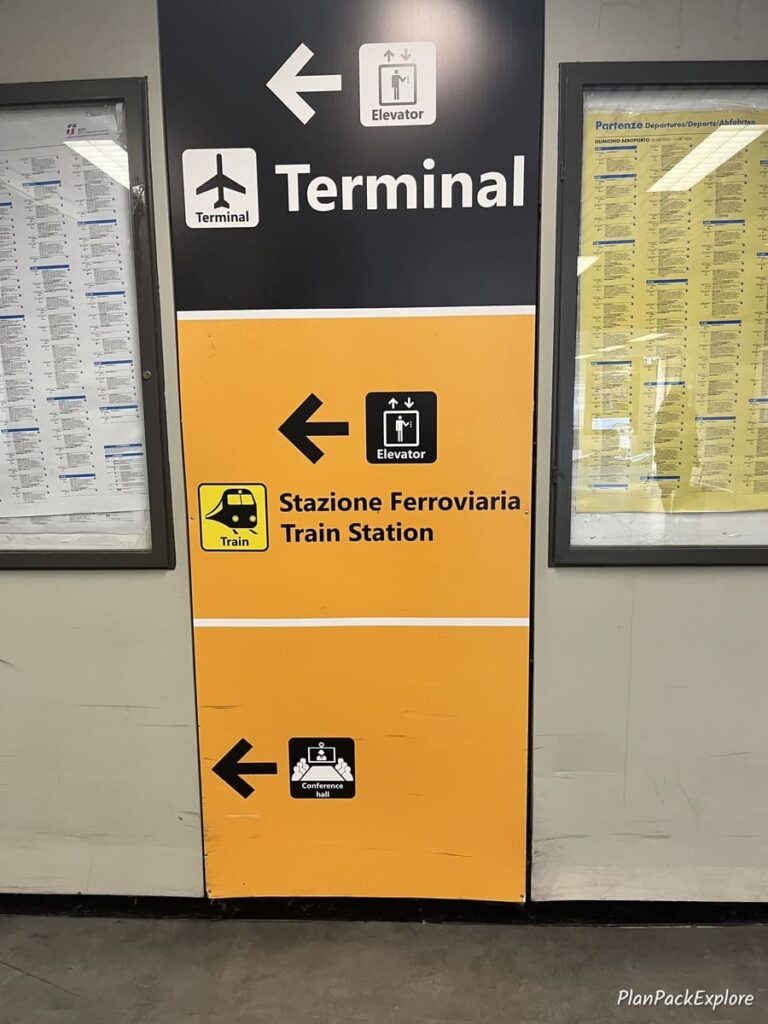
The train station is near the terminal, and the way is clearly marked.
There is also a clearly marked meeting point for the transfer services.
By train
Rome has a few train stations. The main and the largest one is Roma Termini, and the second largest one is Tiburtina.
Depending on where your accommodation is, choose the closest one or the one with the best onward connection to your destination, either via the metro, bus, or tram.
I do not recommend bringing a car to Rome – click here to learn why (and more!)
How to get around Rome
If you’ve read through this article this far, you already know the answer to this question – walking is the best!
You can really take in the vibe of the city and wander into some charming streets between the main highlights

To get to some destinations that may be a little too far to walk for you, try the metro. It’s reliable, clean and not too complicated to navigate. There are only two lines that can take you to most main attractions – red “A” and blue “B”.
Buses and trams are also available, but we didn’t need to use them during our 2 days in Rome.
We walked everywhere during our first day and on the day of our visit to the Vatican we bought the 24-hour transportation card (ROMA 24 tourist ticket) at the self-service kiosk at the metro station and had unlimited access to all modes of the public transport.
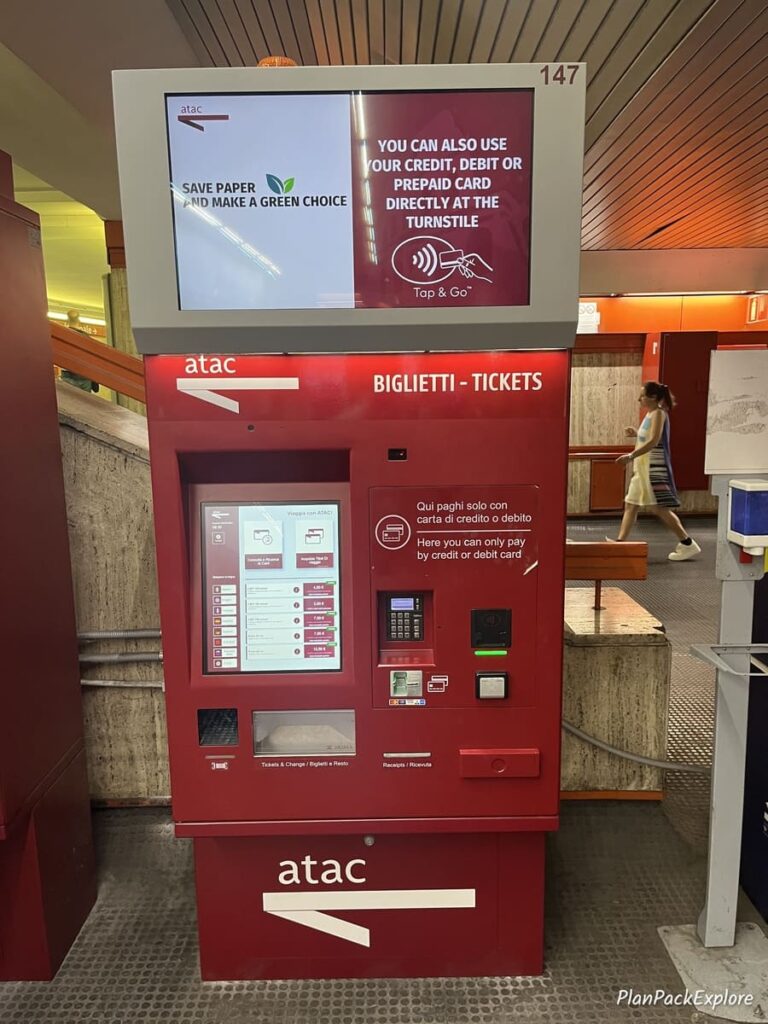
Learn more about it on the official public transportation website for Rome (ATAC).
Helpful hint: remember to validate your card!
For more Italy travel tips, read my guide to what you need to know before traveling to Italy for the first time.
What about the Roma Pass?
Roma Pass is a digital tourist card providing visitors with unlimited access to public transportation for 48 or 72 hours, free entry to 1 or 2 museums of your choice, and discounts to others, plus many other perks.
Whether it’s worth it or not will greatly depend on what itinerary you’ll plan for your visit to Rome and how long you’ll stay. You just have to do the math!
If it looks like it may work for you, you can purchase it on the official website or here.
Where to stay in Rome
If Rome is part of a longer vacation itinerary that involves train travel, I recommend staying by the train station. We stayed at the Hotel Le Petit by the Termini station and had a wonderful experience, but you have many other great choices.

If you’d rather stay near the city center, explore the map below:
Best time to visit Rome
Rome is beautiful any time of the year, but it can be very hot and crowded during the peak summer months. Speaking from firsthand experience – both my visits were in the summer!
While it didn’t take away from my experience, if crowds are not your thing you may want to choose other seasons.
Rome has mild weather in the spring and fall months, so it’s a perfect time to visit.
And don’t forget the Christmas Markets in the wintertime!
For ideas on how to incorporate Rome into your Italian vacation, check out our 7-days Italy itinerary and see exactly how we spent our days!
How much time do you need in Rome?
As much as you can, of course!
But realistically, you need 2 solid days to see the main highlights without being super rushed.
Check out my 2-4 days flexible and easy-to-follow Rome itinerary to see how you can put all these amazing attractions into a manageable travel plan!
👉 Don’t forget TRAVEL INSURANCE! I don’t travel without it. Get a quote from my personal #1 choice – Travel Guard – or check more options here!

👉 To learn about my trusted travel planning resources that help me (and will help you too!) plan trips easily and save money, read this guide: How to Plan a Trip to Europe: My Favorite Travel Resources Revealed.
🛜 Stay connected during your trip with an eSIM like Airalo, Saily or Sim Local!


Let me help you plan your trip!
NEED A PLACE TO HOLD ALL YOUR TRAVEL NOTES TOGETHER?
Grab my handy PRINTABLE, FILLABLE TRAVEL PLANNER – keep track of flights, hotels, tours, daily itineraries – even your trip budget!
Access from any device and edit as needed or print for a hard copy!
BONUS! The planner has journal pages for your memories!

About Monika
An avid traveler and a passionate trip planner, mildly obsessed with being organized and prepared 🙂
Well aware of how precious travel time is, I’m here to share my experience and help you get the most out of your vacation time.
“Taking the hassle out of trip planning”